
















Prevent Biometrics
Customer Portal Support
The home of the world's most trusted smart mouthguard.

Know exactly when your athlete needs medical review.

Real-time head impact alerts from the most trusted smart mouthguard on the market - so coaches, parents and athletes can act with confidence, not guesswork.

For Teams For Parents For Athletes
Most independently
validated instrumented mouthguard (iMG) on the market
Trusted across
elite & grassroots sport
AS FEATURED IN
The Wall Street Journal Yahoo Sports Sports Business Journal BBC SportTechie The Washington Post The Guardian
The only iMG mandated by World Rugby for elite play - chosen after independent lab testing against competing systems. Beyond rugby, Prevent is deployed across Elite programmes worldwide.
TRUSTED ACROSS ELITE SPORT
World Rugby Guinness Men's Six Nations Guinness Women's Six Nations U20 Six Nations Premiership Rugby Super Rugby United Rugby Championship AFL US Olympic Team UK Sports Institute US Department of Defense High Performance Sport New Zealand Betfred Super League
Why it matters

Most concussions go undetected - until it's too late.

Concussions aren't limited to contact sports, or to elite play - and most go undetected until it's too late. A Prevent smart mouthguard changes that, measuring every impact the moment it happens.

3.8M
estimated sports concussions in the US every year
1
50%+
go undetected and undiagnosed - fewer than 5% involve a loss of consciousness
2
44 days
average recovery time when an athlete keeps playing just 15 minutes after a concussion
3
50
U.S. states have enacted sports concussion laws
4
1 CDC  ·  2 McCrea et al., 2004  ·  3 Elbin et al., Pediatrics 2016  ·  4 CDC / NCSL
How it works

The most accurate smart mouthguard in the world.

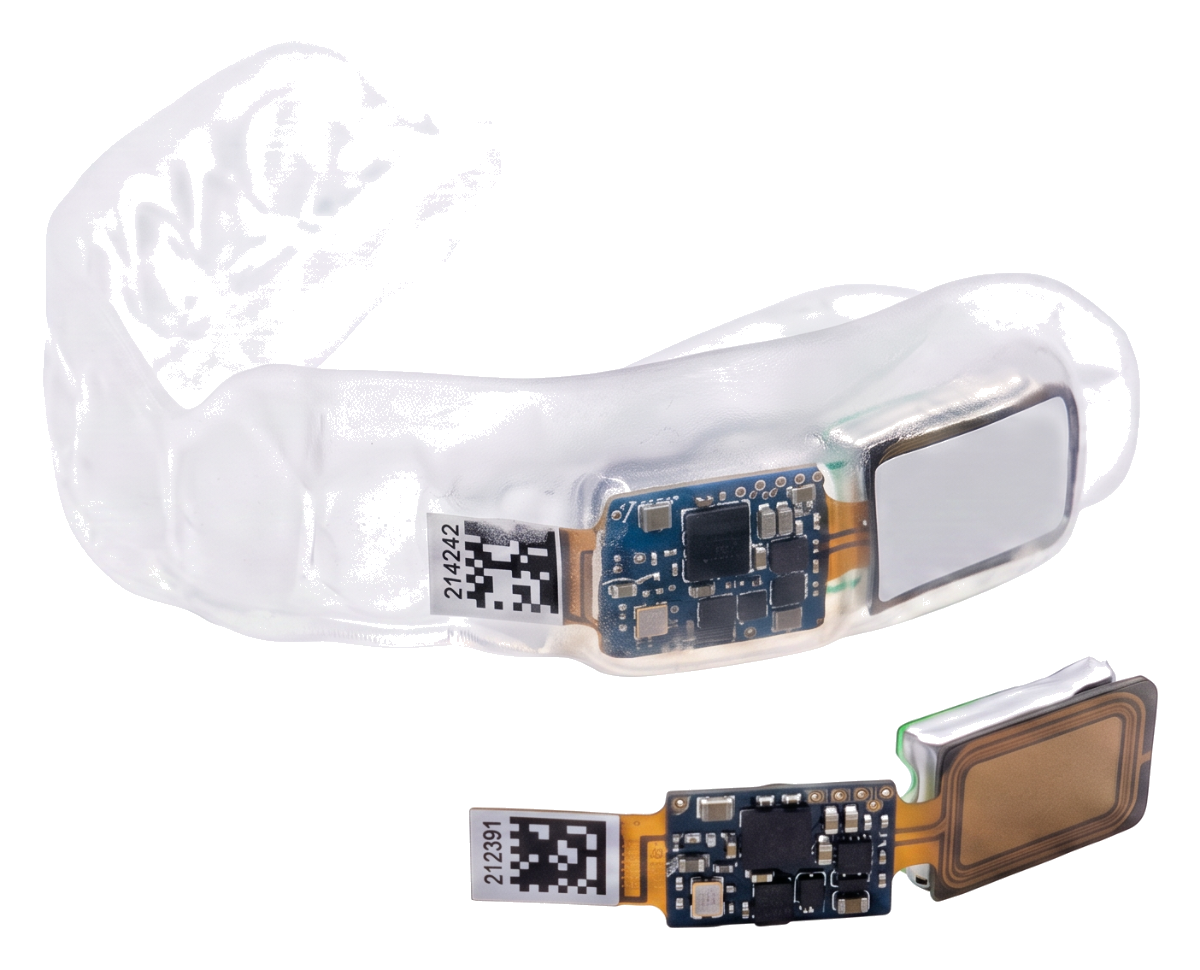
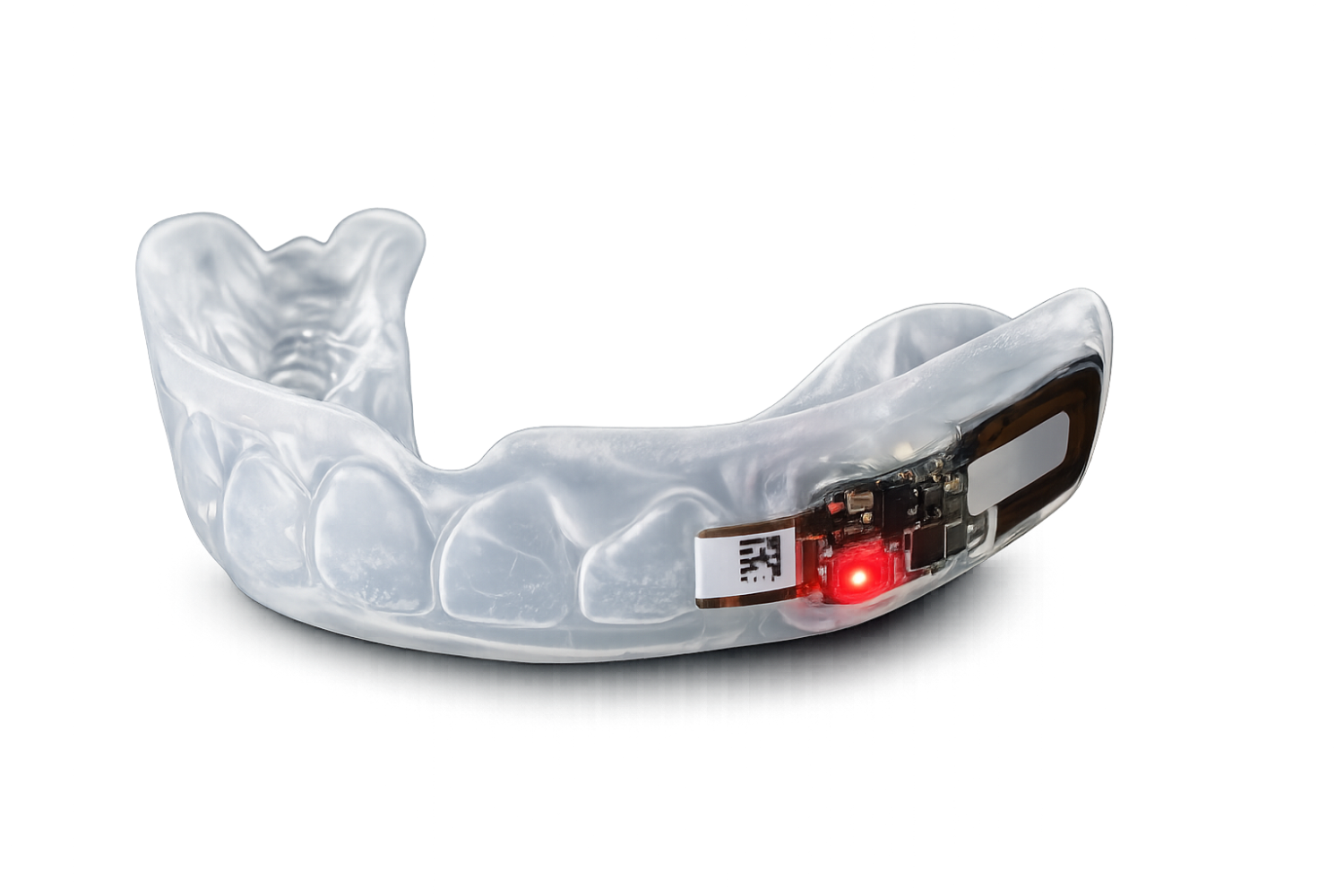
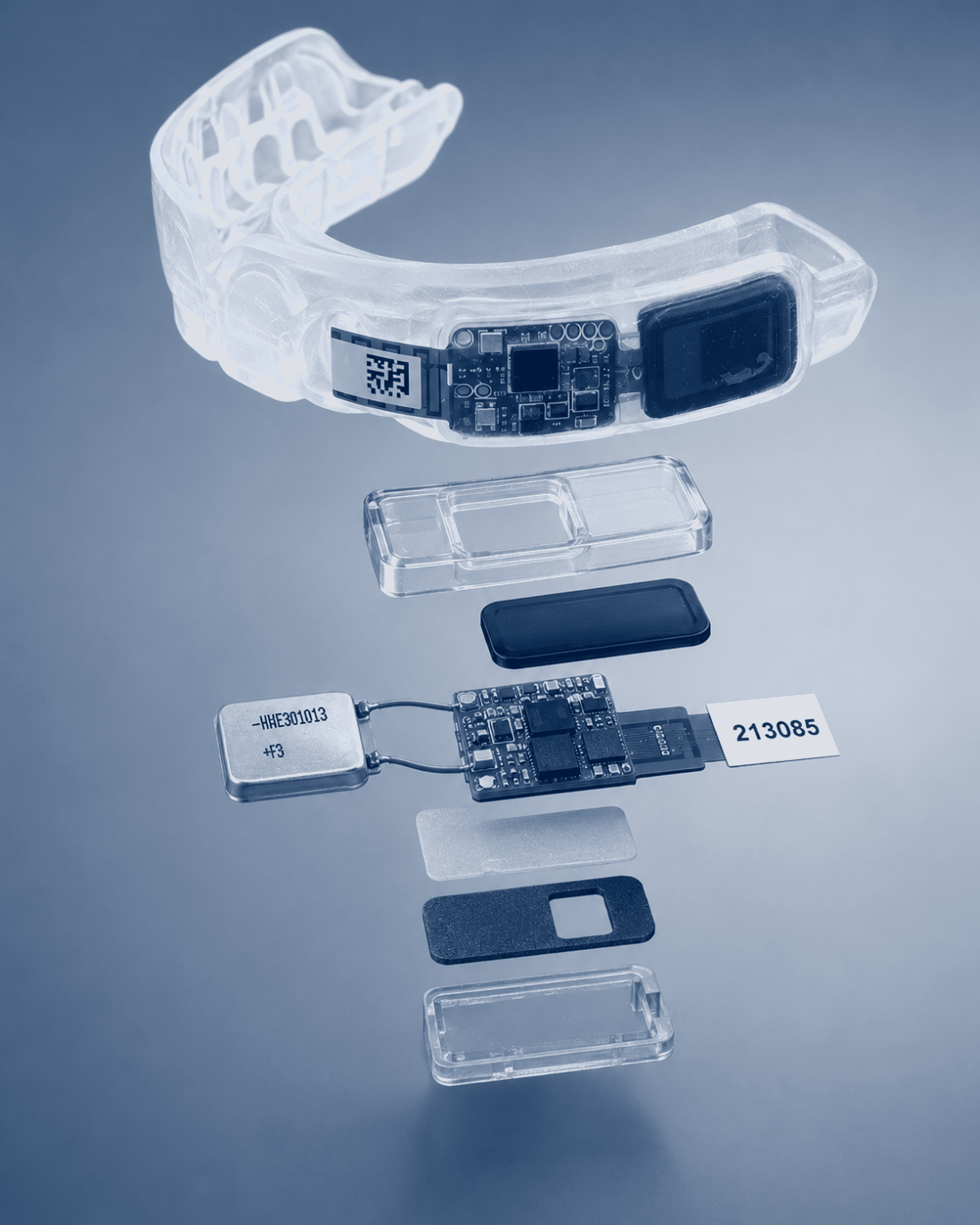
Five measurements, captured at the source of impact, turn guesswork into evidence. Real measurement - no estimates, no compromise on comfort or protection. A low-profile sensor array sits flush against the teeth - closest to the source of every head impact.

Prevent instrumented mouthguard shown with its sensor module
{{ m.stat }}
{{ m.title }}
{{ m.desc }}
Getting started

As easy as 1, 2, 3.

One system, your whole roster covered. Real-time head impact alerts and monitoring - no waiting for symptoms to appear. Make the invisible measurable.

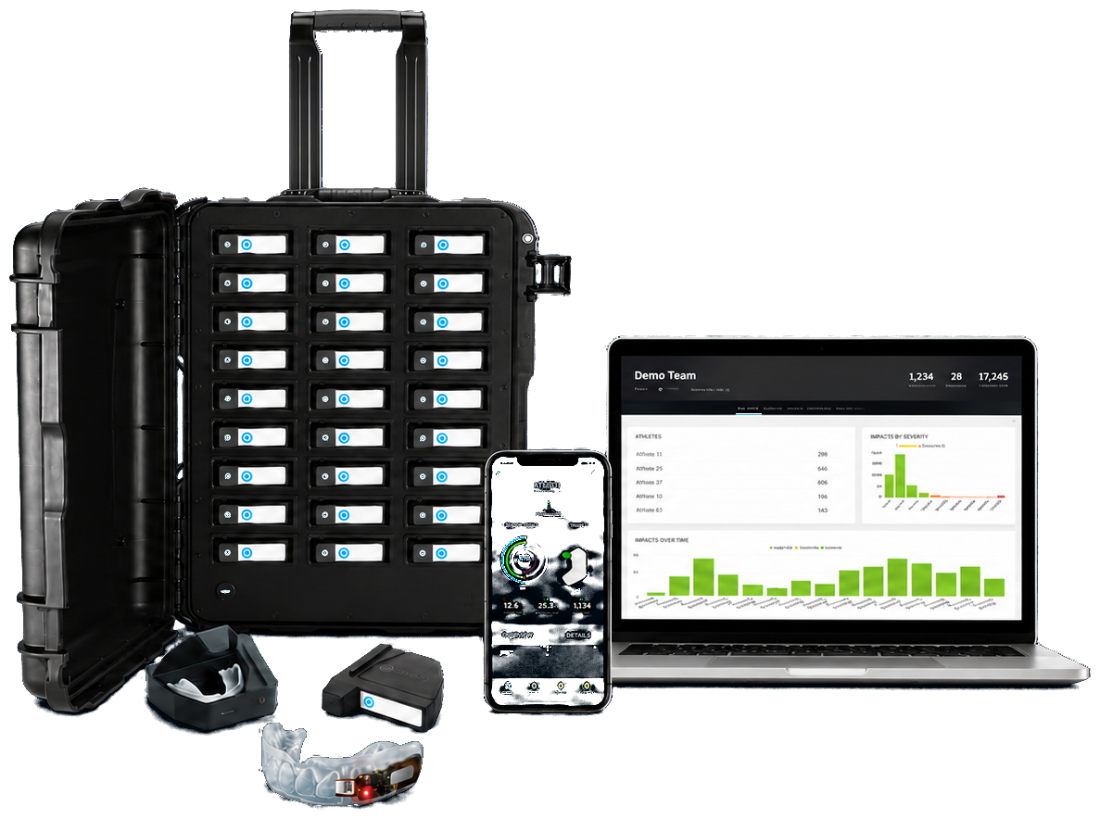
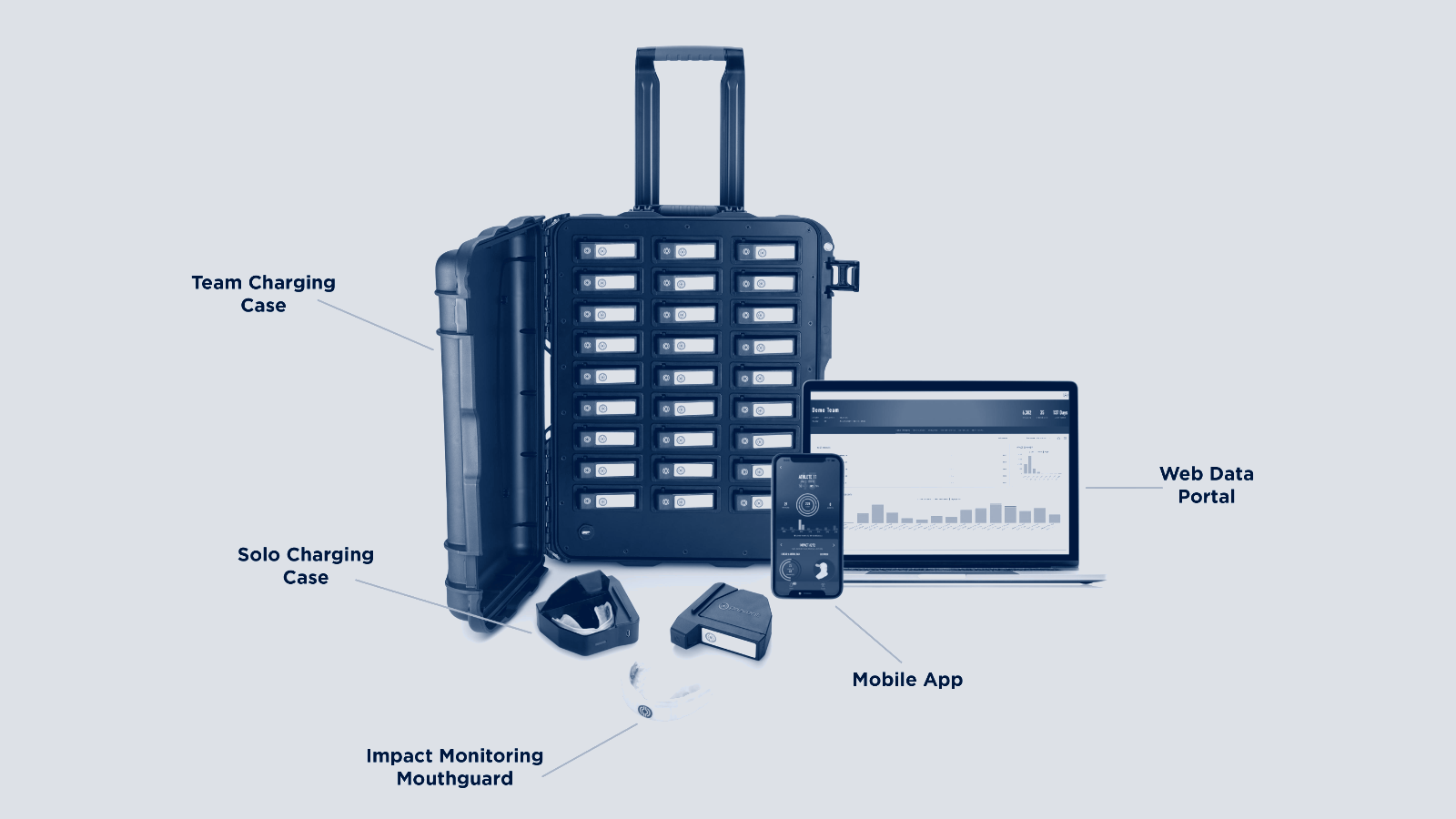
The complete Prevent system - team charging case, solo charging case, Smart Mouthguard (iMG), mobile app and web data portal
{{ s.icon }}
STEP {{ s.n }}
{{ s.title }}
{{ s.desc }}
What's included
{{ c }}
Support

Unmatched customer support.

From guides and FAQs to your team's data portal and a direct line to our support team - everything you need to fit, run, and get the most out of your Prevent system.

POWERED BY HUBSPOT
Help Center & Knowledge Base
Quick-start guides, fitting instructions, full system documentation, video tutorials and answers to every common question - searchable in one hub.
Open the Help Center
Already using Prevent? Need some help? Submit a Support Request
Customer Portal
Sign in to view your team's impact data, sessions and device status in the web portal.
Sign in
General Inquiry
Questions about Prevent, partnerships, or anything else? Send us a message and we'll point you in the right direction.
Send a Message
Contact Us
Prevent Biometrics
4600 W 77th St, Suite 275
Edina, MN 55435
612-662-5552
Our story

It's not brain surgery or rocket science. But we had both.

From the pioneering 1940s research of Colonel John Paul Stapp - the U.S. Air Force flight surgeon known as the "human crash test dummy" for his rocket sled deceleration experiments - to a curious neurosurgeon moonlighting as a boxing referee, the Prevent Instrumented Mouthguard (iMG) is the culmination of years of intensive development by a team of doctors, engineers, and NASA-trained mathematicians.

The technology itself was conceived at the world-renowned Cleveland Clinic, where the first research prototype was fabricated and its accuracy validated in a historic peer-reviewed study. Prevent Biometrics was formed in 2015 to take head impact monitoring from the lab to the playing field.

More than a decade of development later, advances in flexible circuitry, electronics miniaturization, wireless communication, and algorithmic modeling have made possible a breakthrough wearable device that changes the game - and makes it safer.

Today, Prevent is the most independently validated head impact monitoring system on the market.

See for yourself
Our vision

Make the invisible measurable.
Protecting the life-changing benefit of sport.

Prevent was founded to be a positive solution to the safety problems associated with head impacts at all levels of sport. We're applying first-of-its-kind wearable technology to measure head impacts as they happen, giving coaches, parents, and medical practitioners the data they need to help athletes play safely.

Our team

The people behind Prevent.

Doctors, engineers, and mathematicians united by one mission - making the invisible measurable, and the game safer.

{{ t.photoEl }}
{{ t.name }}
{{ t.role }}
{{ t.bio }}
Intellectual property

Product patent protections.

Prevent Biometrics' head impact monitoring technology is protected by the following granted patents worldwide.

{{ g.region }}
{{ pt.id }} {{ pt.title }} {{ pt.year }}

Granted patents by jurisdiction, with year of grant. European patents are validated in the national territories shown. Other patents pending.

Validation

Head impact data you can trust.

A mouthguard that reports numbers is easy to build. One whose numbers hold up is not. Prevent has been tested in independent laboratories, published in peer-reviewed journals, checked against video on real fields of play, and adopted at the highest levels of sport - making it one of the most thoroughly validated head impact wearables available.

Research bibliography
Published iMG literature
{{ bibTotal }} - peer-reviewed articles, conference proceedings, theses and technical reports.
{{ by.year }} {{ by.count }}
{{ bi.cite }} {{ bi.cite }} Military context

Links resolve through the publisher's registered DOI. Theses, technical reports and conference abstracts without a registered DOI are listed without a link.

Elite rugby players in a match tackle
100+
Peer-reviewed research publications
0.98 CCC
Laboratory accuracy against reference equipment
99.8%
PPV for on-field impact identification
Millions
Of head impacts measured in real play
Elite
Adopted at the highest levels of sport
Why validation matters

Measuring a head impact accurately is harder than it sounds.

Any device with a sensor in it can produce a reading. The difficulty is making that reading mean something - and proving it, twice: once under controlled laboratory conditions, and again in the noise of a real match. Prevent has done both, independently.

It has to move with the skull
Sensors mounted on helmets, headbands or skin can shift independently of the head, which distorts what they record. Teeth are the only part of the body rigidly attached to the skull, so a mouthguard measures what the head actually did.
Proven in the laboratory
Independent labs fire controlled impacts at instrumented test heads and compare each device against research-grade reference sensors. Prevent's readings came back near-identical: 0.97 CCC for linear force and 0.98 for rotational force, on a scale where 1.0 is a perfect match.
Proven on the field
A lab result means nothing if the device cries wolf during a match. Researchers matched recorded events against match video frame by frame to confirm each one was a genuine impact rather than a chew, a shout or a dropped mouthguard - producing a 99.8% positive predictive value.
One major proof point

World Rugby put four systems through independent testing. It chose Prevent.

Before committing to any device, World Rugby funded independent research comparing the instrumented mouthguards on the market. Prevent is the only one that meets its Instrumented Mouthguard Performance Specification, and its data is now built into the on-field Head Injury Assessment process used across the elite game.

“Using the Prevent Biometrics mouthguard which has market leading accuracy… Complete game changer.”
Éanna Falvey
Chief Medical Officer, World Rugby
Read the announcement
“The team at Prevent Biometrics has developed the most advanced head impact monitor system available today.”
Joseph Maroon, MD
NFL's longest-serving neurosurgeon
The research

Published, independent, and open to scrutiny.

Prevent data appears in peer-reviewed journals across eight areas of research, written largely by independent university and hospital teams rather than by us. Every study below is linked in full.

{{ publicationTotal }}
View the full list here
{{ g.label }}
{{ g.count }}
{{ g.blurb }}
{{ p.title }}
{{ p.title }}
{{ p.year }} {{ p.journal }}
{{ p.note }}
Get in touch

Request a Demo

Tell us a bit about your program, and our team will be in touch to show you how Prevent works for your athletes.

However you play, we have you covered.

Prevent is deployed by national teams, professional leagues and research institutions worldwide - and is coming to individual athletes and families.

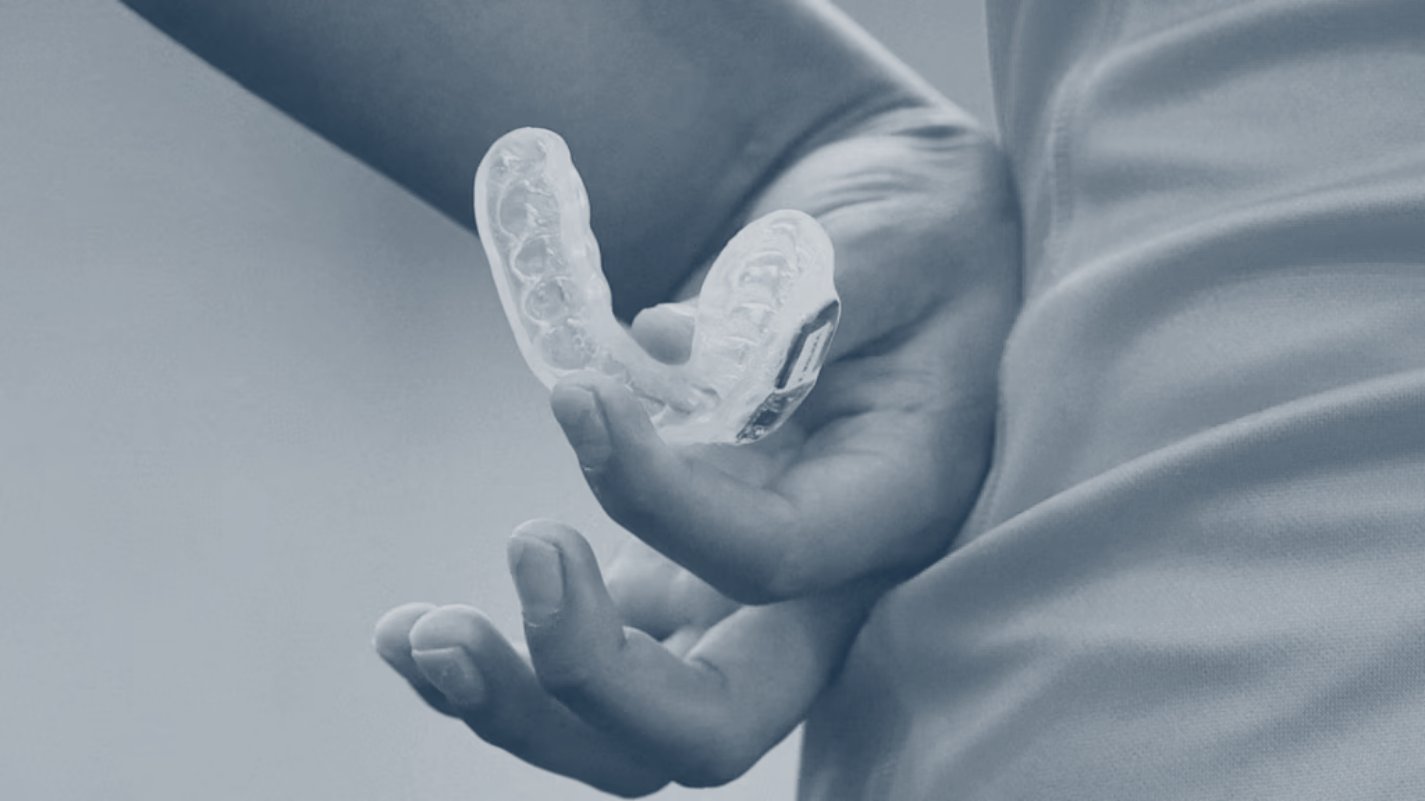
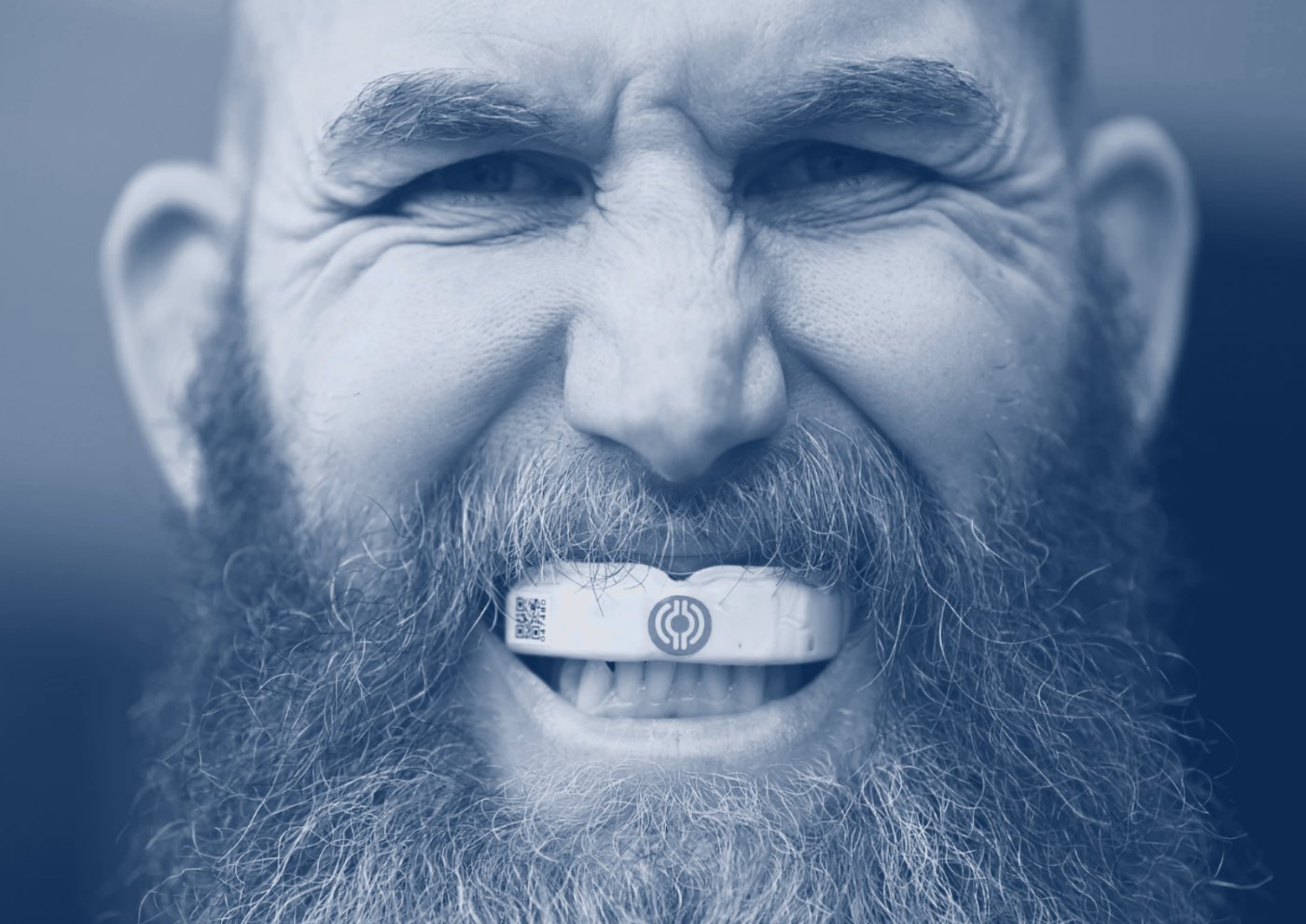
Athlete holding a Prevent instrumented mouthguard
Teams & research

Squads, clubs, unions and research programmes.

Whether you're kitting out a full roster or running a study, speak directly to our sales team to discuss your needs, deployment and pricing.

Request Pricing & Demo
Individuals

Coming soon - the same technology, soon available for individuals and families.

Register your interest and be one of the first to know when the new iMG becomes available for individual purchase.

Register your interest
The risk

A risk that doesn't stop after the first hit.

3.8 million sports concussions happen in the US every year - and more than half go undetected.1 Whether you're a parent watching from the sideline, a coach managing a full roster, or an adult playing a weekend league, the risk doesn't stop at one impact. Among young athletes specifically, it compounds: one concussion makes a second 4 to 6 times more likely.3 Awareness doesn't end with a single alert - it's why ongoing tracking matters at every age.

3.8M
estimated sports concussions in the US every year
1
50%+
go undetected and undiagnosed - fewer than 5% involve a loss of consciousness
2
4-6x
more likely for a young athlete to suffer a repeat concussion after the first
3
1 CDC  ·  2 McCrea et al., 2004  ·  3 Youth/adolescent studies: PMC11924245, citing Cantu 2001, Guskiewicz et al. 2003, Kelly & Rosenberg 1997
See the full research
What's coming

The same technology. Just for you.

We're building a version of the Prevent Smart Mouthguard designed for individual use - the same real-time head impact measurement used at the elite level, now built for one athlete instead of an entire roster.

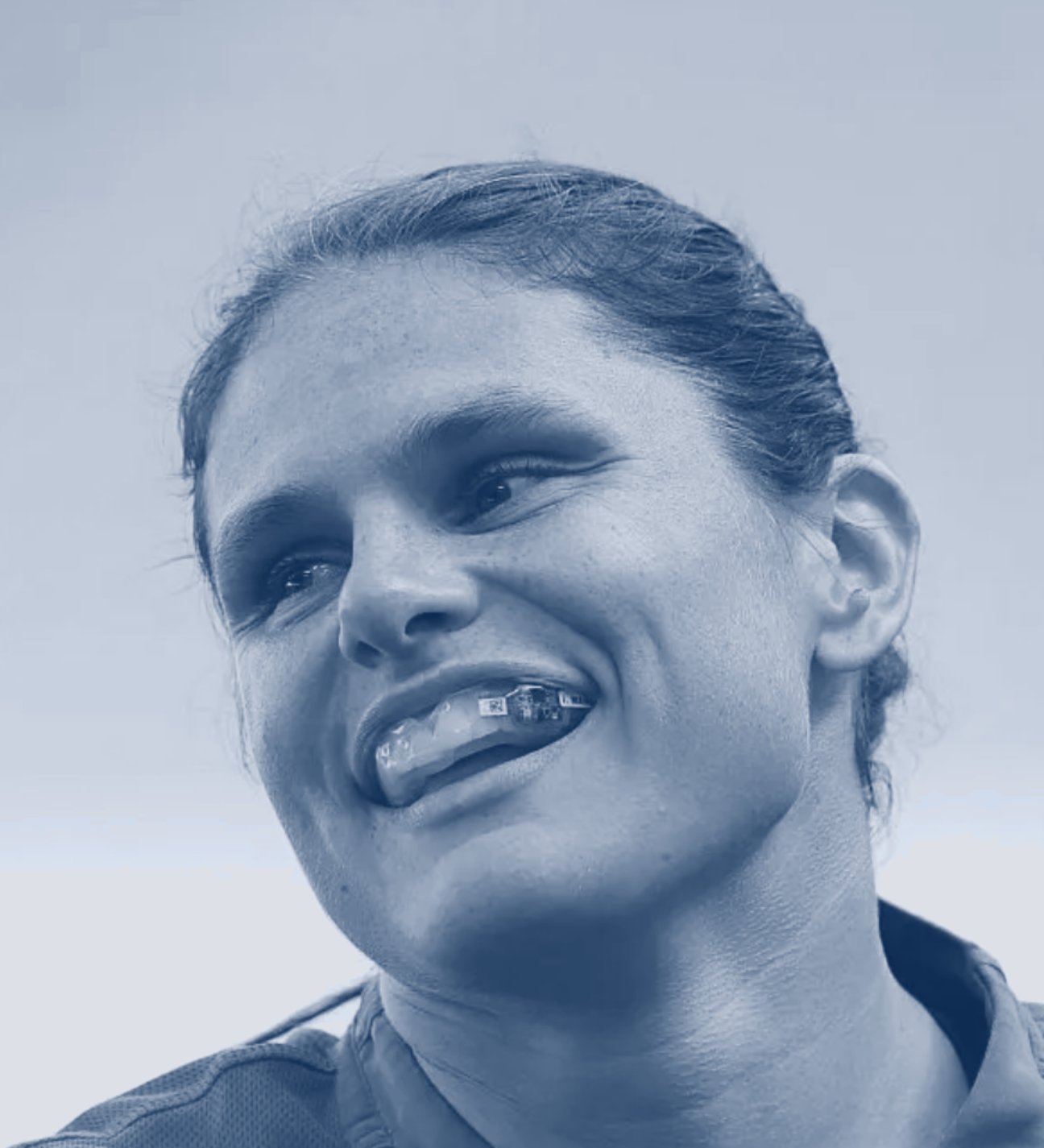
Prevent clear instrumented mouthguard with sensor LED
What that means in practice:
1
Alerts that go straight to you
The parent or athlete - not a team's medical staff.
2
Your data. Your app. In your pocket.
A personal dashboard with session-by-session and season-by-season impact history - all in one place.
3
No compromise on protection or comfort
The same standards used across elite sport, built for individual order.

We're still finalizing the full feature set. Everyone on this list will be the first to know exactly what's included, and when.

Proven at the elite level

Built on a decade of elite-level proof.

This isn't a new, unproven idea - it's technology already relied on by World Rugby, the AFL, the US Olympic Team, and the UK Sports Institute. The individual product is built on the same validated sensor technology, not a scaled-down version of it.

See the research
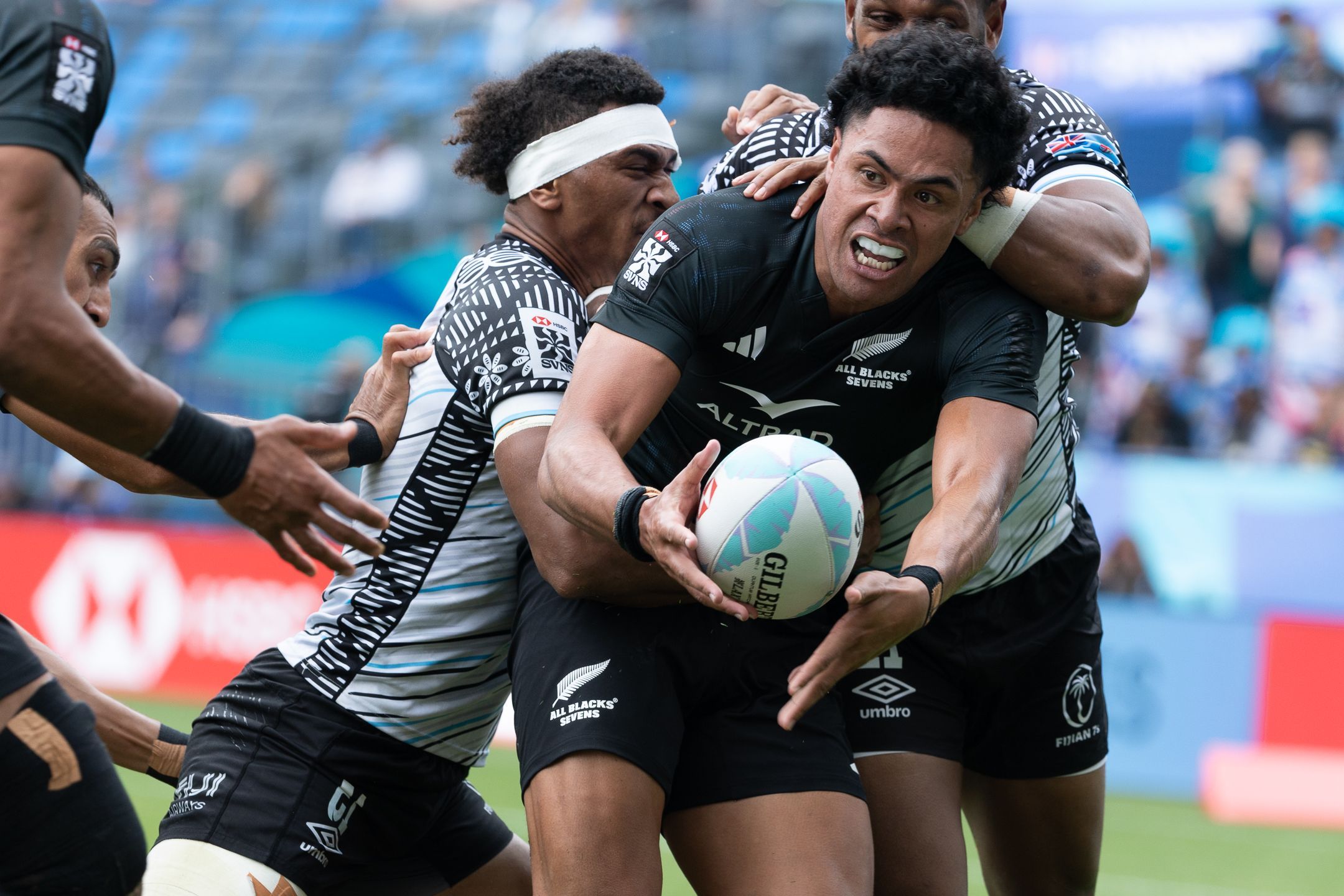
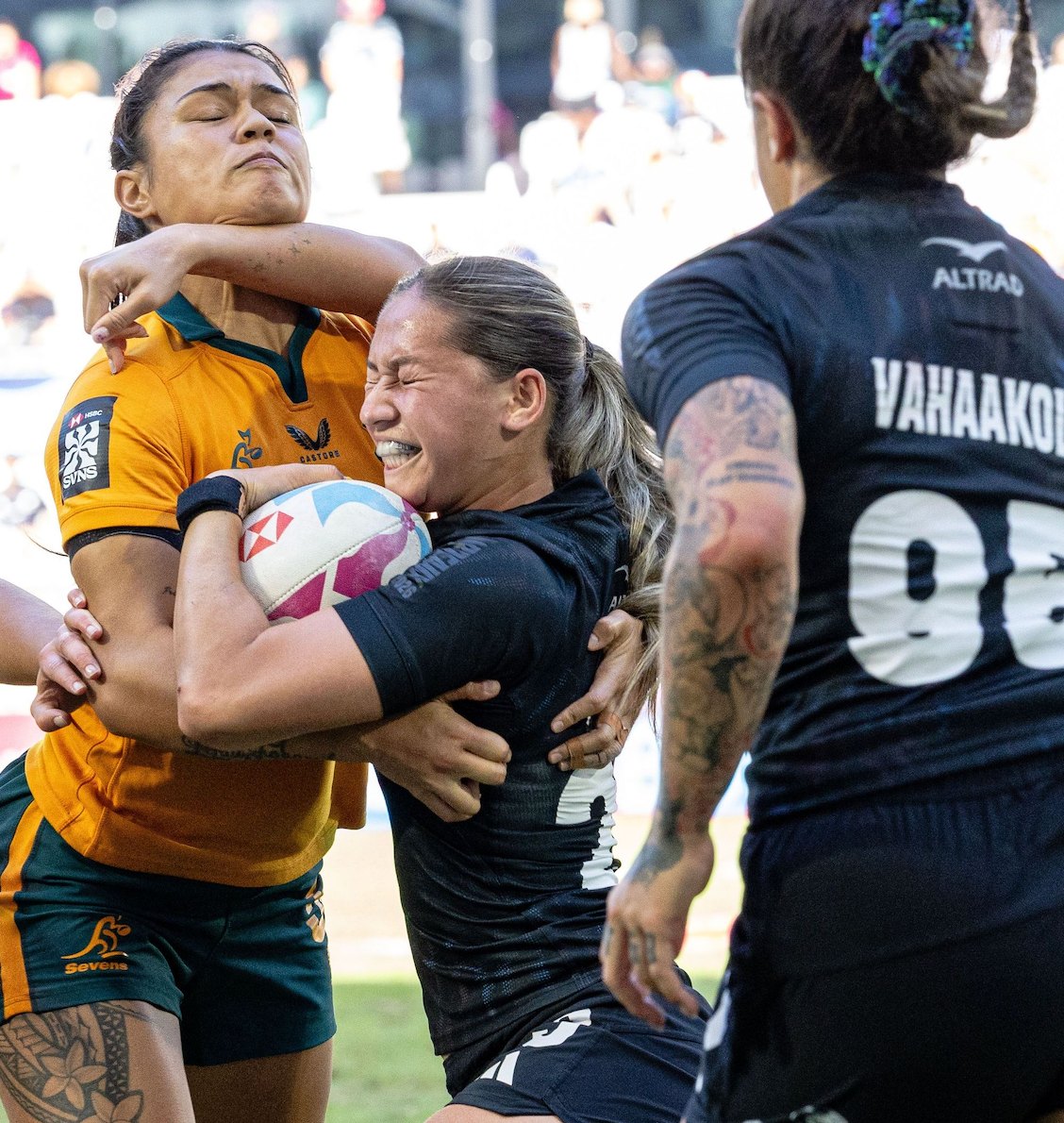
New Zealand and Australia contest a tackle at the HSBC SVNS Bordeaux Sevens
Launch timeline

When can I get one?

We don't have an exact launch date yet. Register your interest below, and we'll email you the moment there's news - pricing, availability, and how to order.

Frequently asked questions

Is this different from the team product?
Yes. The team product is built for coaches, athletic trainers, and medical staff managing an entire roster. This individual product is built for one athlete and the people around them - a parent, or the athlete themselves.
How much will it cost?
Pricing hasn't been finalized. We'll share this with everyone on the list as soon as it's confirmed.
Do I need to be part of a team or club to use it?
No - that's the whole point of this product. It's built for individual athletes in any sport, at any level.
What happens with my email address?
We'll only use it to send you updates about this product. You can unsubscribe at any time, and we won't share your information with anyone else.

Register your interest

Be one of the first to know when the new iMG becomes available for individual purchase.

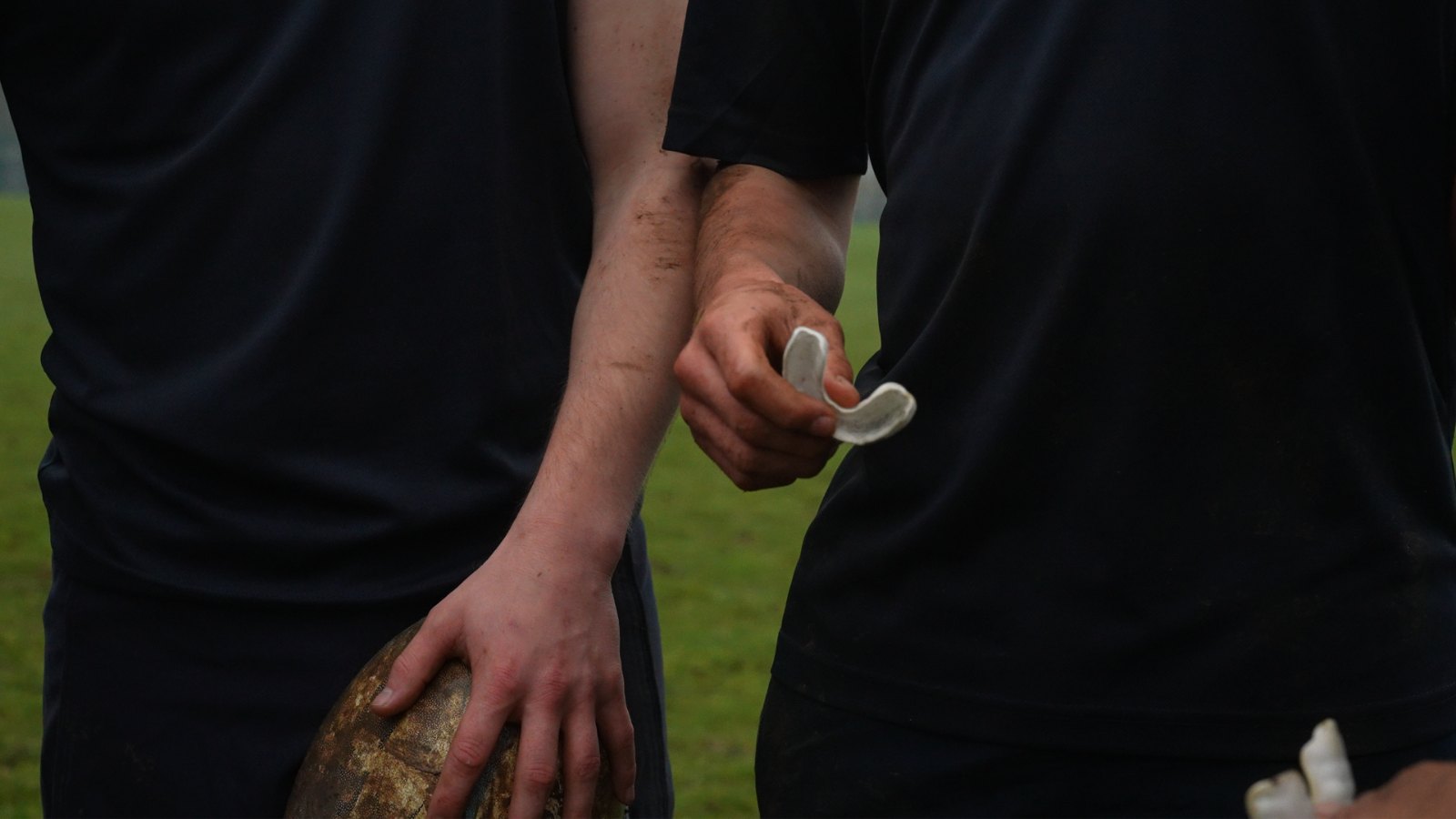
Player holding a Prevent mouthguard on the pitch
Blog

Insights from the field.

Science, product and case studies on head-impact monitoring and the athletes we protect.

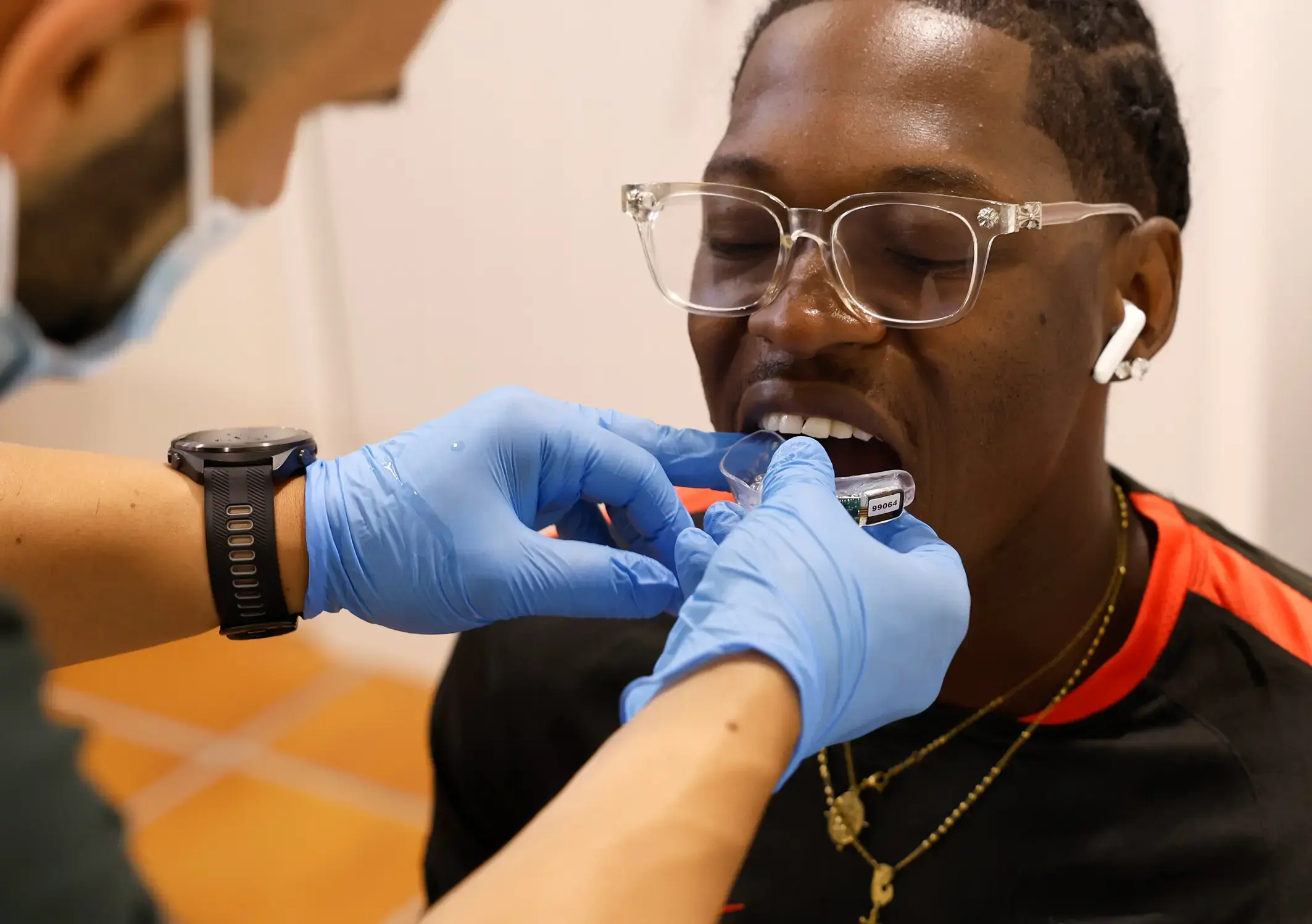
A player being fitted with an instrumented mouthguard
Science
What the World Cup Reminded Us About Soccer's Head Injury Blind Spot and How We're Helping Close It
FIFPRO and the Amsterdam University Medical Centers are measuring the force behind every header - and Prevent's iMGs are the sensor behind the data.
August 2026 Read
Close-up of a player wearing a Prevent mouthguard
Science
iMG Technology Series · Part 5 of 5
Parent and Athlete FAQ: Your Questions About the Prevent iMG Technology, Answered
Comfort, electronics safety, age limits, durability, data access, and whether this is only for elite programs.
August 2026 Read
Rugby World Cup player celebrating a try
Science
iMG Technology Series · Part 4 of 5
The Science and Validation Behind iMG Technology
From a Cleveland Clinic research prototype to over 20 published studies, a World Rugby specification, and the U.S. Department of Defense.
August 2026 Read
USA sevens player running with the ball
Product
iMG Technology Series · Part 3 of 5
What Data Gets Collected - and What It Actually Means
The six measurements taken on every impact, why cumulative load matters as much as the single big hit, and how to read a report.
August 2026 Read
Athlete wearing a Prevent instrumented mouthguard
Product
iMG Technology Series · Part 2 of 5
How iMG Technology Actually Works: From Impact to Alert in Seconds
Inside the mouthguard: what the sensors measure, how a real head impact is told apart from a hard bite, and how the alert reaches the sideline.
August 2026 Read
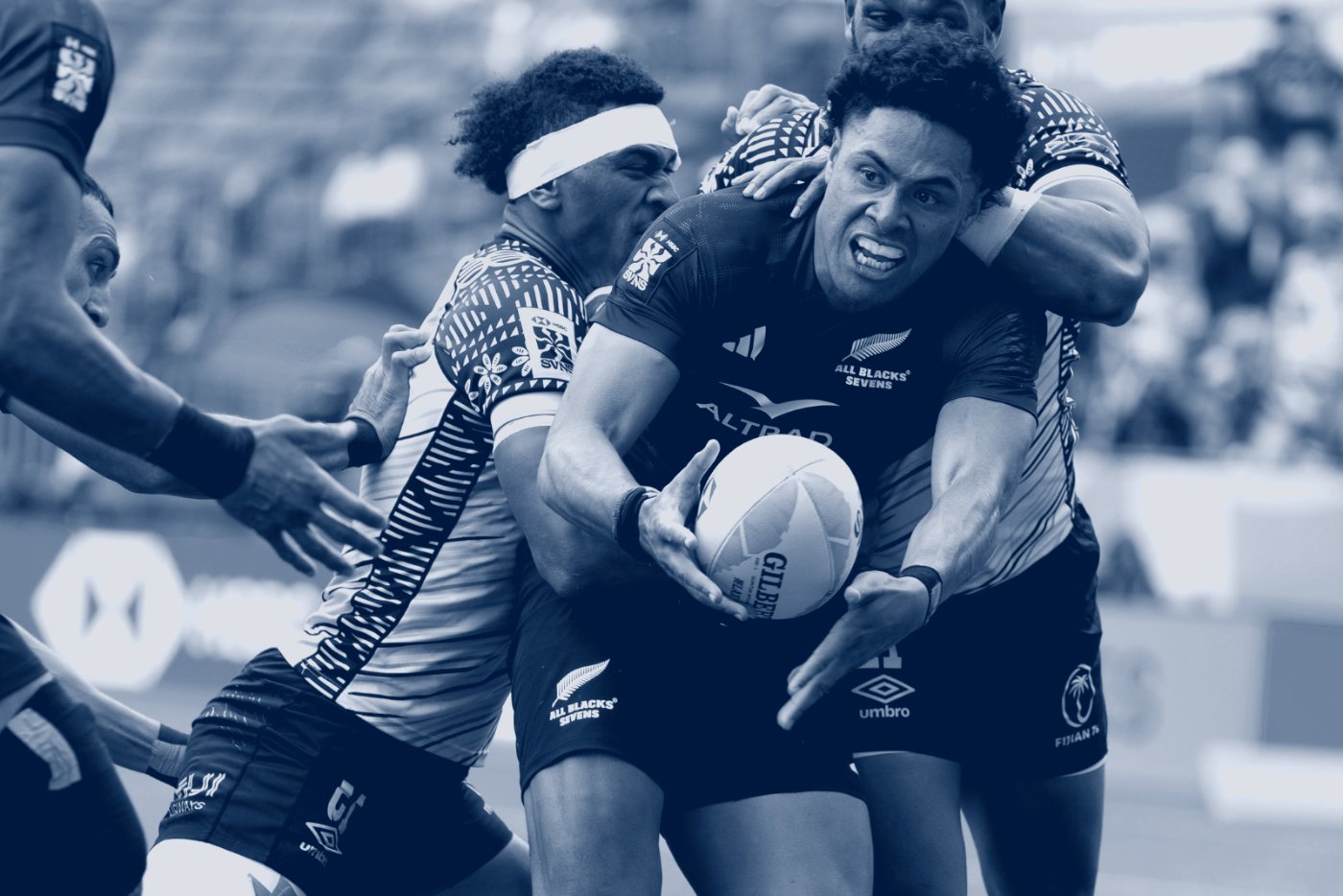
Sevens players colliding in a tackle at HSBC SVNS Los Angeles
Science
iMG Technology Series · Part 1 of 5
Why Head Impact Monitoring Matters: What Every Sports Parent Should Know
3.8 million sports concussions a year, more than half undetected - and why the minutes after a hit decide the recovery.
August 2026 Read
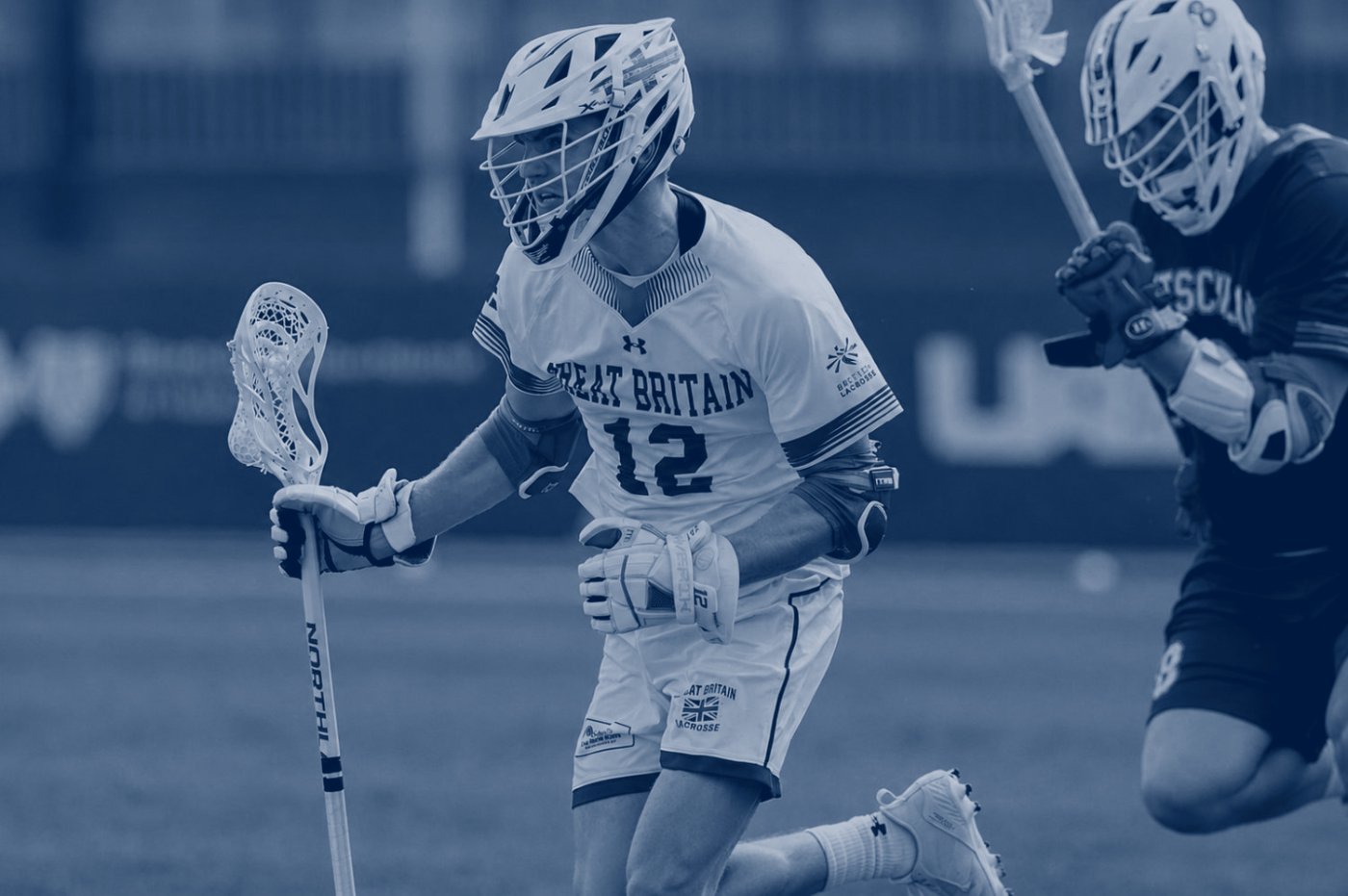
Great Britain lacrosse player carrying the ball under pressure
Science
Concussion Basics Series
Return to play and return to learn after concussion
The six-step protocol, why school comes before sport, and what medical clearance actually means.
July 2026 Read
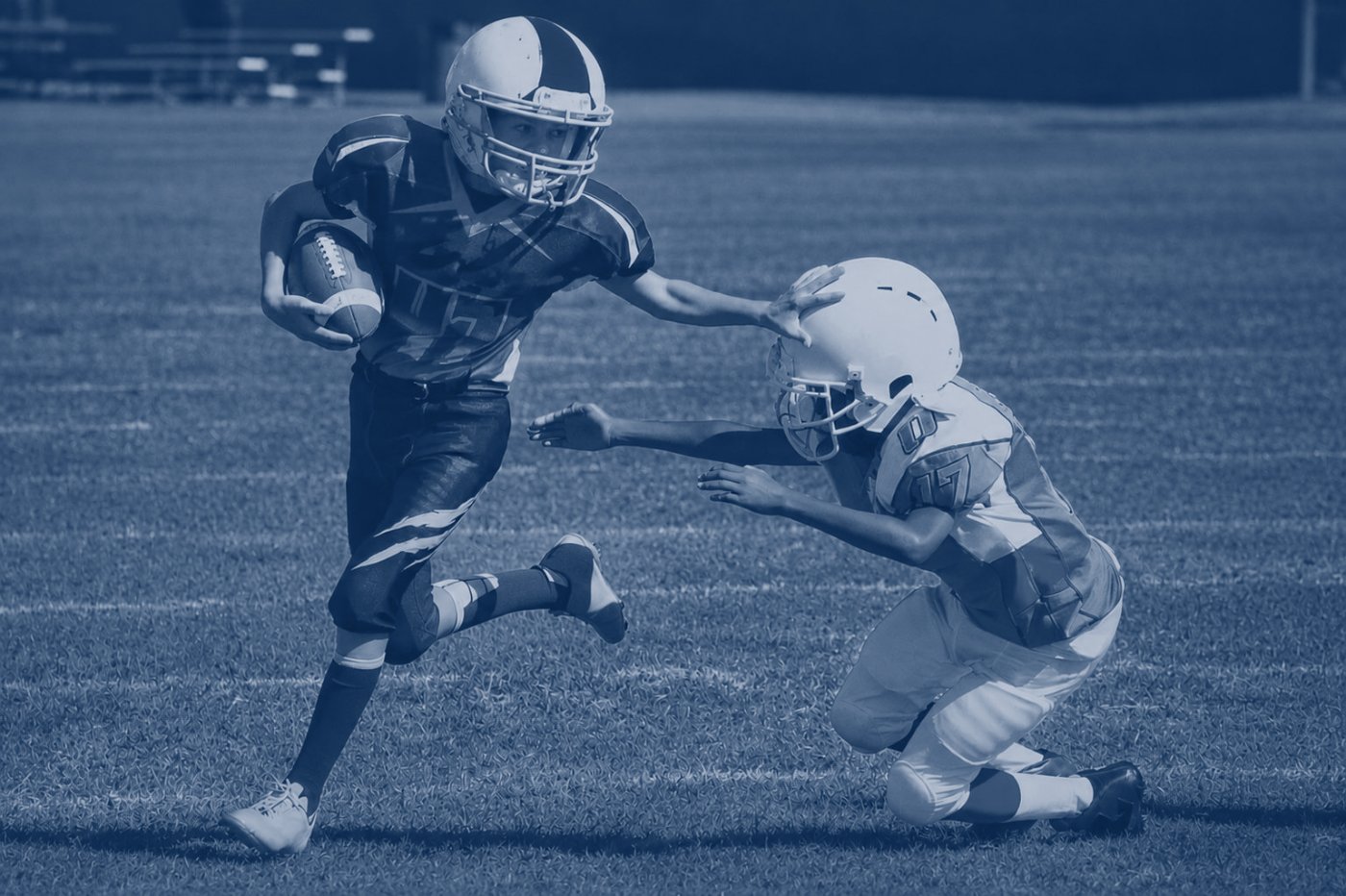
Youth football players in contact during a game
Science
Concussion Basics Series
Concussion symptoms in children: what to look for and when to act
The four symptom categories, the 48-72 hour window most parents miss, and the red flags that mean emergency care.
July 2026 Read
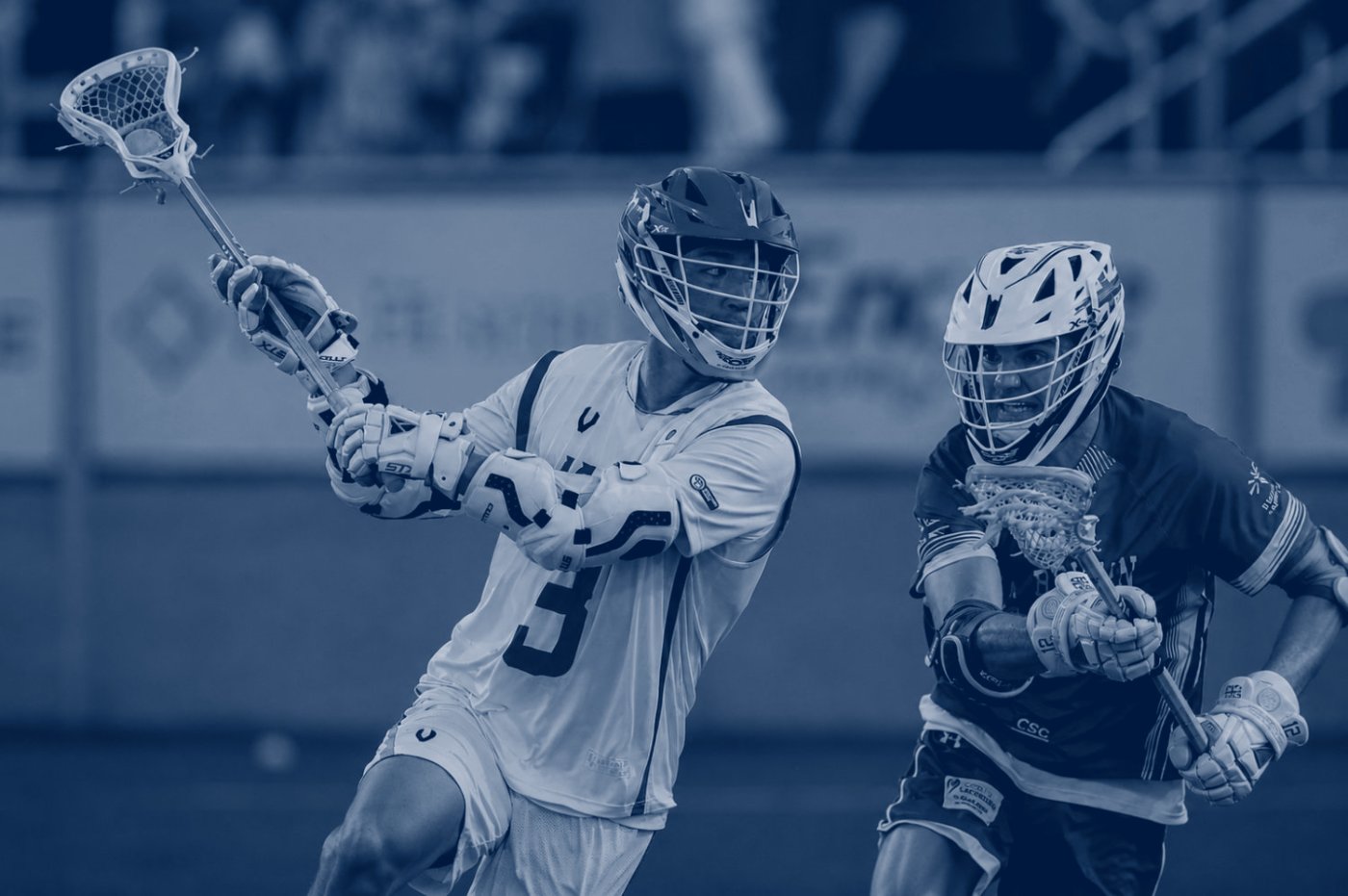
Lacrosse players competing for the ball
Science
Concussion Basics Series
What is a concussion? A plain-English guide for parents and coaches
You don't need to be knocked out, and "mild" doesn't mean minor. The two things most people get wrong.
July 2026 Read
iMG, HIA, HAE explained
Science
iMG, HIA, HAE: what all the acronyms actually mean
A plain-English guide to the smart-mouthguard vocabulary you'll actually run into on the sideline.
July 2026 Read
Exploded mouthguard view
Science
What head acceleration exposure actually tells you
Cumulative load - not just the single big hit - and why HAE is the metric coaches are watching.
June 2026 Read
The complete Prevent system
Product
Fitting the boil & bite iMG in under a minute
A step-by-step look at getting a personalized, comfortable fit for every athlete on your roster.
May 2026 Read
Rugby players celebrating
Case Study
How an elite rugby programme runs Prevent on match day
From pre-match charging and sanitization to live sideline review in the web portal.
April 2026 Read

More insights coming soon.

Newsroom

Press & announcements.

Coverage of Prevent Biometrics and the instrumented mouthguard across sport, science and player welfare.

Join us

Careers at Prevent.

If you're interested in working for us, please send your resume and a cover letter to careers@preventbiometrics.com. We'll review it and get back to you if we think you may be a good fit for the team.

Email your application

Prevent Biometrics · Minneapolis, MN

Military

Blunt force and blast overpressure monitoring for service members.

Prevent Biometrics has been used since 2017 in military applications to monitor blunt forces and blast overpressure - assisted by the U.S. Department of Defense, which has awarded Prevent and its collaborators over $8 million in competitive, peer-reviewed funding.

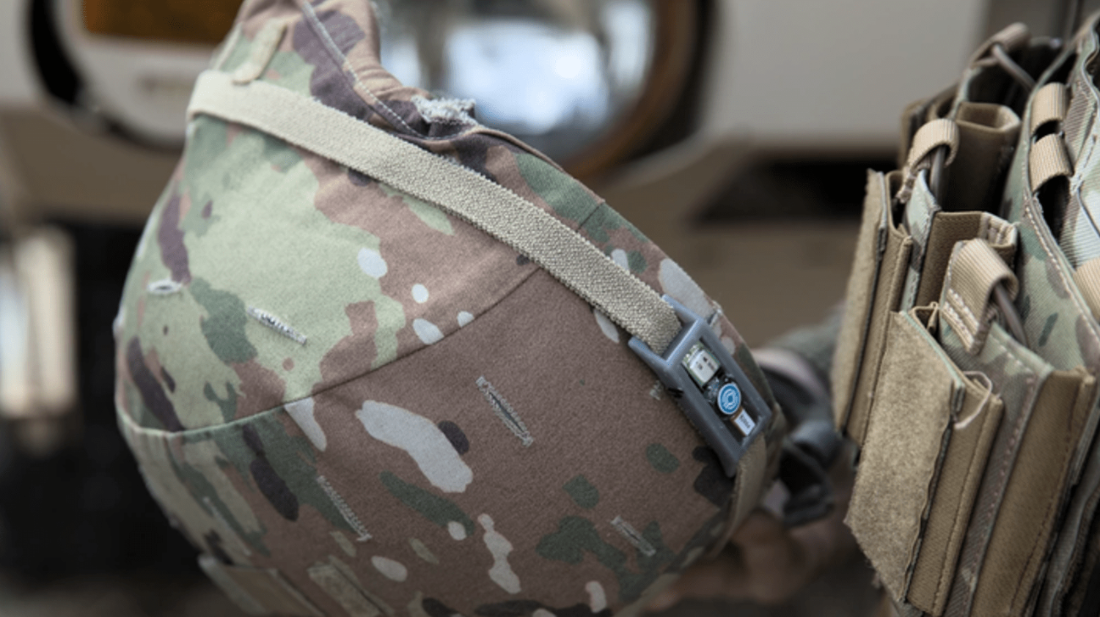
Prevent Combo Sensor mounted on a military helmet
$8M+
in competitive, peer-reviewed DoD funding since 2017
100,000+
head impacts collected across military training environments
3,000+
service members monitored with the Prevent system
Prevent Combination Sensor

The only system that measures blunt force and blast overpressure from a single sensor.

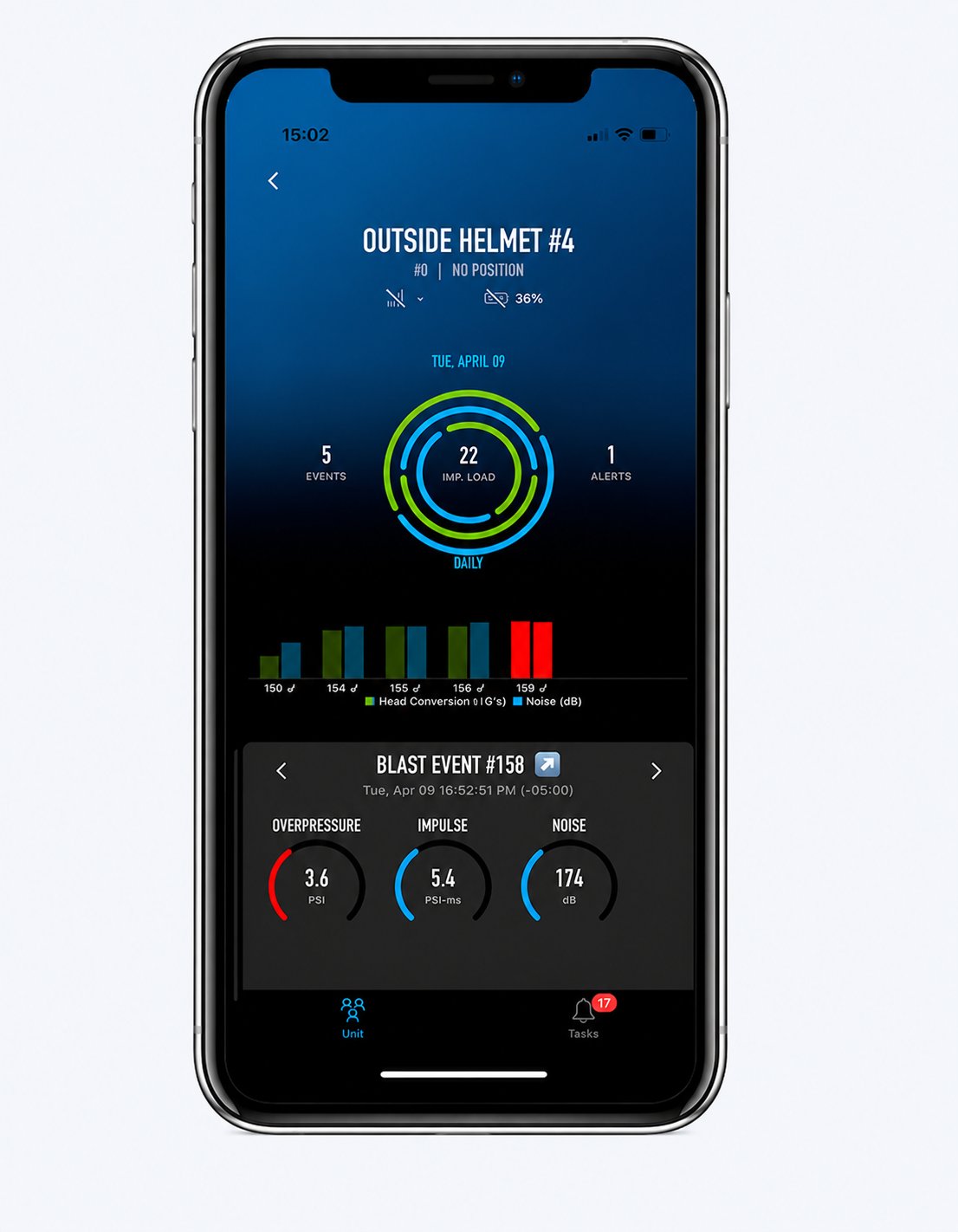
The "Combo Sensor" simultaneously estimates and reports blunt-force head impacts and blast overpressure in real time. Data uploads automatically over wireless sync - no effort from the user - and is available immediately for review, or integrated into other platforms via API.

Prevent app showing overpressure, impulse and noise readings from a blast event
Automatic data upload
No manual transfer - critical information transmits in real time for prompt decision-making.
Built for high-stress environments
An intuitive interface puts actionable data at personnel's fingertips, without added burden.
Integrates with existing systems
Compatible with military protocols already in place, minimizing disruption.
Customizable alerts
Tailor alerts and reporting to your requirements for targeted intervention.
Scalable and cost-effective
From small operations to large-scale deployments, tailored to your budget.
Comprehensive measurement
Captures both blunt-force impacts and blast exposure for a complete injury-prevention picture.
Field development

Combo Sensor field development.

The patented Prevent Biometrics Combo Sensor has been vetted in various military training environments, having collected over 100,000+ head impacts in over 3,000 service members. The Combo Sensor has been successfully deployed to characterize blunt force and blast exposure in the following environments.

Blunt force
  • Parachute Landing Falls (PLF), both static-line and freefall
  • Hand-to-Hand Combatives Training, Boxing, Grappling and Basic Training
  • Military Service Academy Training, including varsity and club sports like American football, Boxing and Rugby
Blast
  • M107 0.50cal suppressed and unsuppressed rifle
  • M2A1 0.50cal unsuppressed machine gun
  • MK19 grenade launcher
  • M4 Carl Gustaf recoilless rifle
  • M72 Light Anti-Armor Weapon (LAW)
  • M141 Bunker Defeat Munition (BDM)
  • 81mm/120mm mortars
  • M777 Howitzer
  • Close quarter combat (CQC) environments
  • Methods of Entry (MOE), Explosive Ordnance Disposal (EOD) and explosive breaching applications
“The ability to put the Prevent technology directly into the hands of soldiers goes far to rapidly evolve technology for the future of the Army.”
Tyler Miller
Captain, ABNSOTD Operations Officer
Multi-sport

Real-time head impact monitoring - for every sport, everywhere.

World Rugby's mandate proved what Prevent can do at the highest level of one sport. But head impacts aren't limited to rugby - and neither is Prevent. From collegiate football fields to national judo federations to Olympic sliding tracks, Prevent has been deployed across a growing range of sports, on nearly every continent.

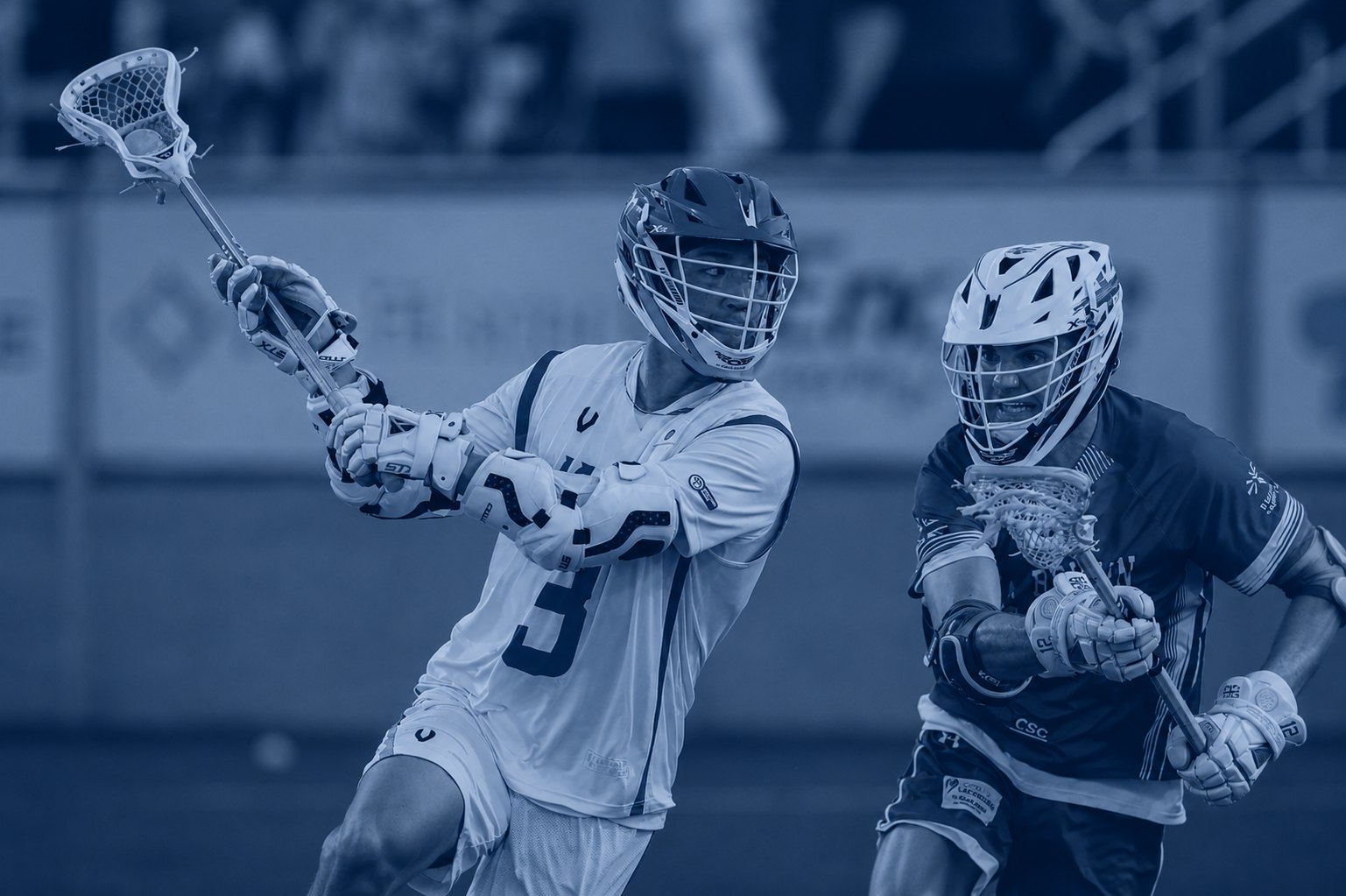
Lacrosse athletes competing while wearing the Prevent iMG
Where Prevent is used

Different sports. Different risks. One system.

Team & contact sports
Football, Lacrosse, Hockey, Soccer, Handball, Australian Rules Football, Cheerleading, and more
Combat & individual contact sports
Boxing, MMA, Judo, Wrestling, Taekwon-Do, and more
Speed & impact sports
Speed Skating, Bobsledding, Canoe Slalom, Motorsport, Aerial Skiing, Downhill Skiing, and more
A global footprint

From the United States to New Zealand - and a long list of places in between.

Prevent has been deployed across six continents. Wherever athletes compete, head impacts happen - and Prevent is built to go where they are.

World map showing the countries where Prevent is deployed
Intensity isn't the only risk factor

Why every sport needs this - not just the hardest-hitting ones.

It's tempting to think head impact monitoring matters most in the sports that look the most brutal from the outside. The evidence says otherwise.

Combat sports don't need convincing - head contact is the point. In boxing, MMA, judo, and taekwondo, a blow to the head isn't an accident of play; it's often the objective. That makes real-time measurement more essential here, not less - cumulative exposure across rounds and sparring sessions adds up in ways a single dramatic hit doesn't capture.

Speed and impact sports carry serious risk with no opponent contact at all. A bobsled crash, a fall on the ice at speed, a canoe slalom collision with a gate or the water itself - these generate significant head acceleration without another athlete ever being involved. Removing "contact" from a sport doesn't remove the risk of a hard, fast, unpredictable impact.

Team sports most people consider "lower risk" still carry real, documented concussion incidence. Soccer headers, lacrosse checks, hockey collisions, and cheerleading falls don't make highlight reels the way a rugby tackle does - but a hit doesn't have to look dramatic to cause a concussion. Most don't.

The common thread isn't how a sport looks. It's whether an athlete's head can accelerate suddenly and forcefully - and that's true across a far wider range of sport than most people assume.

Science
iMG Technology Series

Why Head Impact Monitoring Matters: What Every Sports Parent Should Know

Part 1 of 5 in our series on iMG (instrumented mouthguard) technologyAugust 20266 min read
Sevens players colliding in a tackle at HSBC SVNS Los Angeles

If you're a parent standing on the sideline of a football game, a rugby pitch, or a hockey rink, you already carry a quiet worry in the back of your mind: what happens if my child gets hit in the head, and no one notices?

It's not an irrational fear. It's backed by numbers that might surprise you.

The problem is bigger than it looks

Every year in the United States, there are an estimated 3.8 million sports-related concussions. That's a staggering number on its own, but here's the part that should really get parents' attention: fewer than 5% of concussions involve a loss of consciousness, and more than half go completely undetected.

Think about what that means in practice. A concussion doesn't usually look like the dramatic, movie-style knockout. Most of the time, an athlete gets up, shakes it off, and keeps playing - not because they're being careless, but because nobody, including the athlete, may realize anything happened at all.

This isn't a knock on coaches, athletic trainers, or parents watching from the stands. It's a detection problem. For decades, the primary tools available for identifying a possible head injury have been self-reporting ("Do you feel dizzy? Any headache?") and visual observation from the sideline. Both rely on someone noticing something is wrong, and both depend on the athlete being willing and able to say so.

That's a hard ask for anyone, but especially for young athletes who are trained to push through pain, worried about losing playing time, or simply too disoriented in the moment to accurately describe what they're feeling.

Timing matters more than most people realize

One of the more sobering findings in concussion research is how much recovery time is affected by what happens right after the injury. Athletes who continue playing within just 15 minutes of a concussion average 44 days to recover - dramatically longer than athletes who are pulled from play and evaluated right away.

In other words, the difference between a quick recovery and a season-altering one often comes down to minutes, not weeks. And those minutes only work in an athlete's favor if someone knows an impact happened in the first place.

Left unmanaged, head injuries carry real risk: prolonged recovery, a higher chance of re-injury, and in rare but serious cases, permanent neurological damage. Properly identified and managed early, the outlook for most athletes is good. The gap between those two outcomes is, very often, simply awareness.

Parents are already voting with their choices

This isn't a niche concern. Roughly one in four parents say they've considered keeping their child out of sports altogether because of worries about head injuries, and participation in some contact sports among younger age groups has declined in recent years. Meanwhile, all 50 states have now passed some form of youth concussion law, requiring education, removal-from-play protocols, or medical clearance before an athlete can return to the field.

The awareness is there. What's often missing is a reliable way to act on it in real time - something more objective than "how does he/she look to you?"

Why objective data changes the equation

This is the gap that the Prevent instrumented mouthguard (iMG) technology was built to close. Instead of relying only on how an impact looks from the sideline or how an athlete feels in the moment, the Prevent iMG measures what actually happened to the athlete's head - the force, the direction, and the frequency of impacts - as it happens, on the field.

That doesn't replace a doctor's evaluation, and it isn't a diagnosis. What it does is give parents, coaches, athletic trainers, and medical staff an objective signal to work from: this hit crossed a threshold worth checking on. That single piece of information can be the difference between an athlete getting pulled for a two-minute evaluation and an athlete staying in the game with an injury nobody caught.

For organizations already using this technology - including World Rugby, top NCAA programs, and the U.S. Department of Defense - the appeal isn't complicated. It's the same thing every parent wants: a better way to know when something needs a closer look.

What's next

In the next post in this series, we'll get into the mechanics: what's actually inside the Prevent instrumented mouthguard, how it tells a significant head impact apart from an athlete just biting down hard or wearing the mouthguard in their pocket, and how that information gets from the field to the people who need to see it - often within seconds.

This post is part of Prevent Biometrics' educational series on instrumented mouthguard (iMG) technology. Read Part 2: How iMG Technology Actually Works.

Prevent Biometrics smart mouthguards alert coaches and medical staff the moment a significant head impact occurs. Learn how it works

Product
iMG Technology Series

How iMG Technology Actually Works: From Impact to Alert in Seconds

Part 2 of 5 in our series on iMG (instrumented mouthguard) technologyAugust 20267 min read
Athlete wearing a Prevent instrumented mouthguard

In our last post, we talked about why head impact monitoring matters: most concussions don't look dramatic, more than half go undetected, and the minutes right after an impact matter enormously for recovery. So how does The Prevent instrumented mouthguard (iMG) actually solve that problem?

Let's open it up and look at what's happening, step by step, from the moment an athlete receives a head impact to the moment someone on the sideline knows about it.

It starts with where the mouthguard sits

The mouthguard is a deliberate choice, not just a convenient place to hide a sensor. The upper jaw is rigidly connected to the skull, which means a mouthguard captures head motion far more accurately than a helmet-mounted sensor or skin patch, which can shift and vibrate independently of the skull itself. If you want to measure what an athlete's head actually experienced, the upper teeth is the best place in the body to do it.

Athletes can wear either a custom-fitted mouthguard, made from a dental scan, or a "boil-and-bite" version that fits in about a minute - similar to a standard sports mouthguard, but built around the sensor. Elite athletes and programs with dental support tend to prefer the custom fit; community and school programs often go with boil-and-bite for convenience. Either way, the electronics are fully sealed against chewing, moisture, and the general abuse a mouthguard takes over a season, and the devices are biocompatibility tested and certified to consumer wearable safety standards. The system is approved for athletes age 10 and up.

What the sensor actually measures

Inside the mouthguard is a set of motion sensors that continuously track how the head moves. When a hit occurs, the system captures:

Linear acceleration - how hard the head was hit, in a straight-line sense
Angular acceleration - how much the head was made to rotate, which research increasingly points to as a major contributor to brain injury
Location and direction - where on the head the impact landed, and from which direction
Impact count - a running total of how many impacts an athlete has absorbed
Cumulative load - how those impacts add up over a practice, a game, or a season

This combination matters because a hard, straight-on hit and a glancing, rotational hit can affect the brain very differently, even at similar force levels. Capturing both linear and angular motion gives a much fuller picture than either measurement alone.

Telling a real head impact from a fake one

Here's a problem you might not expect: mouths do a lot of things that aren't head impacts. Athletes clench their jaw, chew on the mouthguard, drop it, place it in their sock/pocket or bite down hard out of frustration or effort. A sensor that simply reacts to sudden force would flag all of that as a valid impact, burying real impacts in a pile of false alarms.

Prevent's mouthguards use a patented approach - built around what's called a deformable body algorithm. In plain terms, the system is designed to distinguish the specific motion signature of an actual head impact from the motion signature of jaw clenching, biting, or a dropped device. This is the difference between a system that's technically "recording data" and one that's recording data anyone can actually trust and act on. It's also the kind of detail that sounds small but is the difference between a sideline alert people take seriously and one they learn to ignore.

From the mouthguard to the sideline

Once an impact is detected and crosses a pre-set threshold, here's roughly what happens next:

The mouthguard's sensor records the impact data at the moment it occurs.
That data is synced - via a paired mobile app - to a parent or team's phone, typically within seconds.
If the impact exceeds a preset threshold based on sport/gender/age, sideline user receives a real-time alert, flagging that the athlete received a head impact and how significant the impact was.
The sideline user can use that alert as the trigger to pull the athlete aside for a proper evaluation - the mouthguard doesn't diagnose concussion, it tells the caregiver where to look.
All of the impact data, whether or not it crossed the alert threshold, is also collected by the app, building a longer-term picture of what each athlete has been exposed to over time.

That last point is worth sitting with for a second: even impacts that don't trigger an alert still matter. A single big hit is one thing to watch for, but a an athletes overall impact workload (how many impacts they had in across a day, week, season) adds up too - which is exactly what we'll dig into in the next post.

The takeaway for parents and athletes

None of this is about catching every possible bump or bruise. It's about giving the people responsible for an athlete's safety - coaches, trainers, and team doctors - an objective, real-time signal instead of a guess. The mouthguard doesn't replace their judgment; it gives them better information to use it with.

What's next

In Part 3, we'll walk through exactly what data gets collected on your child's mouthguard, what those numbers actually mean, and how to read an impact report without needing an engineering degree.

This post is part of Prevent Biometrics' educational series on instrumented mouthguard (iMG) technology. Read Part 1: Why Head Impact Monitoring Matters, or continue to Part 3: What Data Gets Collected - and What It Means.

Prevent Biometrics smart mouthguards alert coaches and medical staff the moment a significant head impact occurs. Learn how it works

Product
iMG Technology Series

What Data Gets Collected - and What It Actually Means

Part 3 of 5 in our series on iMG (instrumented mouthguard) technologyAugust 20266 min read
USA sevens player running with the ball

So your child's team has started using Prevent's instrumented mouthguards. At some point, a coach or athletic trainer may show you a dashboard, a report, or a text alert with numbers on it - and if you're like most parents, your first reaction might be: okay, but what am I actually looking at?

Let's break down what's being measured, why each piece matters, and how it fits together into something a parent (not just a biomechanics researcher) can actually use.

The six things being measured on every impact

Every time an athlete takes a hit significant enough to register, the system captures six pieces of information:

Peak linear acceleration. This is the straight-line force of the hit - essentially, how hard the head was struck. It's measured in "g-force" (multiples of gravity), the same basic unit you'd hear used to describe a car crash or a roller coaster.

Peak angular acceleration. This measures rotational force - how much the hit caused the head to twist or spin. Research over the past decade has increasingly pointed to rotational forces as a key contributor to brain injury, sometimes even more so than straight-line force. A moderate hit that causes a lot of rotation can matter just as much as a harder hit that doesn't.

Impact location. Where on the head the hit landed - front, back, side, top. Location can affect both how the impact is interpreted and how it's used to inform technique conversations with athletes.

Direction of force. The angle the force came from, which pairs with location to build a fuller picture of exactly what happened.

Impact count. A simple running tally: how many impacts has this athlete absorbed, in this practice, this game, this week, this season.

Impact load intensity / cumulative workload. This is where individual hits stop being individual and start being a pattern. Instead of just looking at "was there one big hit," this tracks how impacts accumulate over time for a given athlete.

Why the cumulative picture matters as much as any single hit

It's natural to focus on the scary-looking single number - the one big hit that triggers an alert. That's important, and it's exactly the kind of thing that should get an athlete pulled aside for an evaluation.

But a lot of the real value of this data shows up over time, not in any one moment. An athlete who takes a steady string of moderate impacts across a season is experiencing something different than an athlete who takes one hard hit and nothing else. Neither pattern is automatically "bad" - contact sports involve contact - but having the actual record means coaches and medical staff aren't relying on memory or guesswork to answer questions like: has this athlete been taking more contact than usual lately? Does practice contact intensity need adjusting? Is this athlete's exposure trending in a direction worth a conversation?

This is often described as tracking "athlete workload" - treating head impact exposure a bit like teams already treat pitch counts for pitchers or minutes played for an athlete returning-from-injury athlete. It's one more data point in the broader picture of how much physical stress an athlete is absorbing.

What a report might actually show you

Depending on how your child's organization has set things up, you (or team staff) might see a dashboard showing:

A timeline of impacts across a practice or game, with the biggest hits flagged
A season-long view of total impact count and cumulative load for an individual athlete
Comparisons of practice-day versus game-day impact patterns
Which threshold-crossing impacts triggered a real-time alert and evaluation

None of this data is a diagnosis. No number on that screen tells you whether your child has a concussion. What it tells you an a user is this is worth a closer look, or this athlete's exposure this month looks different than normal - the kind of objective flag that used to depend entirely on someone noticing something from the sideline.

Who sees this data, and why that's worth asking about

Because this is health-adjacent data about a minor, it's a completely fair question to ask your child's team or school: who has access to this information, how is it stored, and how long is it kept? Reputable programs using this technology should be able to answer clearly - and if you're a parent evaluating whether your child's team should adopt this technology, that's a good question to bring to the athletic department directly.

What's next

Numbers are only reassuring if you trust where they came from. In Part 4, we'll look at the research behind this technology - where it originated, how it's been validated by independent universities and medical institutions, and why organizations like World Rugby and the U.S. Department of Defense have adopted it.

This post is part of Prevent Biometrics' educational series on instrumented mouthguard (iMG) technology. Read Part 2: How iMG Technology Works, or continue to Part 4: The Science and Validation Behind iMG.

Prevent Biometrics smart mouthguards alert coaches and medical staff the moment a significant head impact occurs. Learn how it works

Science
iMG Technology Series

The Science and Validation Behind iMG Technology

Part 4 of 5 in our series on iMG (instrumented mouthguard) technologyAugust 20266 min read
Rugby World Cup player celebrating a try

Any parent handing their child a piece of wearable technology and being told "this helps keep them safer" has every right to ask: says who, and based on what?

That's a fair question, and it's one worth answering with more than a marketing claim. Here's where the Prevent technology actually came from, and how it's been tested.

It started in a hospital, not a startup garage

The Prevent instrumented mouthguard technology didn't begin as a consumer gadget idea. The underlying research originated at the Cleveland Clinic, where researchers developed and validated an early prototype through peer-reviewed research. Prevent Biometrics was founded in 2015 specifically to take that clinical research and turn it into something teams and athletes could actually use on the field. The team behind it includes doctors, engineers, and mathematicians (some with NASA backgrounds), supported by a board of neurosurgeons and research scientists spanning biomechanics, materials science, and software engineering.

That lineage matters. A lot of consumer wearables start with a sensor and work backward to find a use for it. This technology worked the other direction: it started with a clinical research question - how do we accurately and objectively measure head impacts in real time - and spent roughly a decade being refined before reaching the field.

Independent validation, not just internal testing

It's one thing for a company to say its own product works. It's another for outside researchers, with no financial stake in the outcome, to test it and publish the results. This technology has been the subject of over 20 published academic studies from institutions including:

Virginia Tech, assessing sensor accuracy in both lab and field conditions
Stanford University, comparing instrumented mouthguards head-to-head for measurement accuracy
Indiana University, studying subconcussive impact exposure in high school football
University of Oxford, measuring head kinematics in military boxing training
Cleveland Clinic, validating single-event head impact measurement
Leeds Beckett University, quantifying head acceleration in rugby league and rugby union
U.S. Army Research Laboratory, testing against simulated impact platforms

Independent, head-to-head comparisons have also found this system outperforming competing instrumented mouthguards on the market - which is a meaningfully different claim than simply "we tested our own product and it works fine."

A recognized standard, not a niche tool

In 2021, World Rugby - one of the most safety-conscious governing bodies in contact sports - selected this technology as its head impact monitoring system of choice, and it remains the only instrumented mouthguard approved to meet World Rugby's official Instrumented Mouthguard Performance Specification, verified through independent testing institutes. Dr Éanna Falvey, World Rugby's Chief Medical Officer, has publicly described it as "a complete game changer" for advancing player welfare at the international level.

It's also the U.S. Department of Defense's only head impact data provider - an interesting vote of confidence, since military researchers studying blunt force exposure and combat training have similarly demanding accuracy needs.

Beyond the World Rugby endorsement, Joseph Maroon, the NFL's longest-serving neurosurgeon, has called it "the most advanced head impact monitor system available today."

Ongoing research, not a finished product

Part of what makes this space credible is that the research hasn't stopped. Teams and universities continue to use this data to ask new questions: how head impact exposure compares between girls' and boys' sports, how impact patterns differ between practice and games, how workload accumulates across a season, and how findings from elite programs like World Rugby's international competitions might inform safety standards further down at the community and youth level.

That ongoing academic scrutiny is, frankly, a good thing. It means the thresholds used to trigger alerts, and the science behind how impacts are interpreted, are continuing to be tested and refined by researchers outside the company itself - not set once and left alone.

The takeaway for parents

When you're evaluating any safety technology for your child, it's reasonable to ask whether the science behind it holds up to outside scrutiny. In this case, the honest answer is: yes, extensively, by researchers at major universities and medical institutions with no financial interest in the outcome, and by sports' own governing bodies at the international level.

What's next

In our final post, we'll answer the most common questions parents and athletes actually ask once they've decided to look into this technology - comfort, safety of the electronics, who sees the data, and a few myths worth clearing up.

This post is part of Prevent Biometrics' educational series on instrumented mouthguard (iMG) technology. Read Part 3: What Data Gets Collected, or continue to Part 5: Parent and Athlete FAQ.

Prevent Biometrics smart mouthguards alert coaches and medical staff the moment a significant head impact occurs. Learn how it works

Science
iMG Technology Series

Parent and Athlete FAQ: Your Questions About the Prevent iMG Technology, Answered

Part 5 of 5 in our series on iMG (instrumented mouthguard) technologyAugust 20267 min read
Close-up of a player wearing a Prevent mouthguard

We've covered why head impact monitoring matters, how the technology works, what data it collects, and the research behind it. Now let's get practical. These are the questions parents and athletes actually ask once they're considering this technology for themselves or their team.

"Does the mouthguard diagnose concussions?"

No, and this is worth being clear about. The mouthguard measures the physical forces involved in a head impact - how hard, in what direction, how often. It does not diagnose a concussion. What it does is give parents, coaches and medical staff an objective signal that a particular hit is worth a closer look, so a trained professional can evaluate the athlete properly. Think of it less like a diagnostic tool and more like a very precise tap on the shoulder that says "check on this."

"Is it comfortable enough for my kid to actually wear it?"

It's designed to feel like a standard sports mouthguard, not a piece of medical equipment. Athletes can choose between a custom-fitted version, made from a dental scan, or a hybrid boil-and-bite version that fits in about a minute, similar to the mouthguards most athletes already wear. Custom fits tend to be preferred by elite athletes and programs with access to dental support; boil-and-bite is a common choice for school and community programs because of its convenience. Either way, the goal is that athletes barely notice a difference from a regular mouthguard during play.

"Are the electronics inside safe?"

The mouthguards have gone through extensive independent safety testing and certification, and the components are sealed against chewing, moisture, and general wear and tear - they're built to handle exactly the kind of abuse a mouthguard takes over a season of practices and games. They're also biocompatibility tested, meaning the materials that touch your child's mouth have been evaluated specifically for that kind of prolonged contact.

"What age can wear one?"

Athletes age 10 and up are able to wear the mouthguard. It's designed to work across a wide range of sports, not just the obvious contact ones like football or hockey - the compact design has also appealed to athletes in non-contact sports who want their own exposure tracked, whether for personal peace of mind or a coach's request.

"How long does it last, and what happens if it breaks?"

Under standard care, the mouthguard is built to last about a year. If it develops a defect unrelated to normal athlete wear and tear, it's covered for replacement - so a manufacturing issue isn't something a family or team has to absorb the cost of.

"Who actually sees my child's data?"

This is one of the most important questions a parent can ask, and the honest answer is: it depends on how your child's team or school has configured their program. Currently, the data lives in an app managed at the organization level, which means access is set by whoever administers the program for your child's team - typically athletic trainers, coaches, and team medical staff. If this matters to you (and it should), ask your child's athletic department directly how access is configured, who can see individual athlete data, and how long records are retained. A program that takes this technology seriously should have clear, confident answers to those questions. As Prevent launches a direct to consumer version of the iMG, guardians will be able to set up data viewing permissions.

"Does it work with any phone?"

Currently, the system is compatible with iOS and Android devices

"Isn't this just for elite programs like the NFL or World Rugby?"

It's true that this technology has been adopted by major organizations - World Rugby, top NCAA programs, and the U.S. Department of Defense among them - but it's also used at the community, school, and preparatory level. The same underlying problem (impacts going unnoticed without objective data) exists at every level of sport where kids and teens are playing contact and collision sports. The technology scales down to a single team just as it scales up to a national governing body.

"Will this replace my judgment as a parent, or my athlete's coach's judgment?"

No - and it's not meant to. The mouthguard adds one more objective input into decisions that coaches, athletic trainers, and team physicians are already making. It doesn't replace a parent noticing their kid seems "off" after practice, and it doesn't replace a trained medical evaluation. What it does is make sure fewer impacts go completely unnoticed in the first place, so those human judgment calls have better information behind them.

The bottom line

Head impacts in youth and amateur sports have historically been caught by chance - a coach happens to see the hit, an athlete happens to mention feeling dizzy. The Prevent mouthguard technology doesn't eliminate the need for good coaching, attentive parenting, or qualified medical care. It closes the gap between "something happened and nobody noticed" and "something happened and the right person got a heads-up in time to do something about it."

If you're considering this technology for your child's team, the best next step is usually a direct conversation with your athletic department or team medical staff about how they plan to use it, who will monitor the alerts, and how they'll handle the data. Those conversations are exactly what this technology is meant to support. It is worth noting, in 2027 the technology will also soon be available for direct purchase as a parent

This concludes our five-part series on instrumented mouthguard (iMG) technology. Catch up on Part 1: Why Head Impact Monitoring Matters, Part 2: How iMG Technology Works, Part 3: What Data Gets Collected, and Part 4: The Science and Validation Behind iMG.

Prevent Biometrics smart mouthguards alert coaches and medical staff the moment a significant head impact occurs. Learn how it works

Science

What the World Cup Reminded Us About Soccer's Head Injury Blind Spot and How We're Helping Close It

August 2026
A player being fitted with an instrumented mouthguard Credit: SJPF

This summer's FIFA World Cup was historic before a ball was even kicked: the first tournament hosted across three countries, the first at 48 teams, and by most measures the most-watched World Cup ever played. It was also a tournament that, like nearly every major soccer event in recent memory, put a spotlight back on an injury risk the sport has spent decades treating as routine - knocks to the head and face.

Coverage during the tournament pointed to something soccer has historically underdiscussed: unlike a hard tackle or a collision, a header is not treated as an "injury event" at all. It's a skill. Commentators praise a well-timed header the same way they praise a clean pass. But a skill that involves repeatedly meeting a moving ball with your head is also, unavoidably, a repeated head impact, and soccer has had far less data on that reality than sports like rugby or American football, where contact is treated as the obvious hazard it is.

That gap is exactly what a research project coordinated by FIFPRO, the global players' union, and the Amsterdam University Medical Centers has set out to close, and it's a project Prevent is proud to be part of.

A sport with almost no data on its most routine head impact

"We do not have a lot of data on heading, especially," says FIFPRO's Director of Medical, Prof. Dr. Vincent Gouttebarge, a former professional footballer who played 14 seasons in France and the Netherlands. "We have some data with regards to the frequency of heading during matches, but we have much less about the number of headers during training and almost nothing available about the forces associated with headers."

That last gap, force, not just frequency, is the heart of the problem. Soccer has generally discussed heading in binary terms: did a player head the ball, or didn't they? But a header off a corner kick, a header off a long goalkeeper clearance, and a header in a five-a-side training drill are not the same event for the brain. As Dr. Gouttebarge put it, "a long kick from a goalkeeper of 50 or 60 metres that leads to a header has a different force and a different impact compared to when you throw the ball." Without measuring that difference, it's nearly impossible to write guidelines that mean anything.

How the research works

This is where Prevent's instrumented mouthguards (iMGs) come in. Players in the study wear our mouthguards during training and matches, which capture the force of every head impact in real time. Researchers then cross-reference that data with match and training video, linking each measured impact to the specific header, tackle, or collision that caused it - the same core approach we use in our rugby and American football research partnerships, now applied to the world's most-played sport.

Data collection has already taken place in Malta, the Netherlands, Finland, England, and Portugal, gathered largely during player-union training camps, including sessions for out-of-contract players, and in partnership with clubs. That approach let researchers reach a wide range of players without requiring any single squad to wear sensors for an entire season. Uptake has been strong in training, with roughly three-quarters of participating players wearing the mouthguards during sessions. Players are also surveyed after sessions to estimate their own header count, giving researchers both the objective sensor data and a player's own sense of their exposure to compare it against.

Dr. Freja Lahteenmaki, a former professional player in Denmark's top flight now practicing medicine in Finland, is running part of this research as her PhD. "As a former player, I have seen many of my former teammates experience the effects of head impacts and concussions," she says. "When we look at brain health in footballers, we look at the cumulative load on the brain — and that consists of the impact magnitude, as well as the frequency of impact. We know there's a lot of studies done in rugby and American football, and this is important to explore more in football, where we intentionally use our head."

Why measuring force could change the guidelines

Current heading guidance in youth and amateur soccer already limits exposure in training, but those limits are largely built on caution rather than measurement - nobody has been able to say, with real data, what actually counts as a "high-force" header. "If we have more data about the force associated with heading, then potentially we can put a number to that," Dr. Gouttebarge says. "That could help us have more valid, quantified guidelines for players."

No single study will settle a question this important on its own. Dr. Gouttebarge is clear that FIFPRO's findings will need to sit alongside other high-quality research before any guideline changes are made. But turning "heading seems risky" into an actual, measured number is the necessary first step, and it's one that simply wasn't possible before this kind of on-field sensor data existed.

What this means for the next generation of players

The project's next phase extends data collection to women's professional players, an important expansion, given how much less research has historically included women's soccer at all, despite evidence that female athletes experience concussions at higher rates in comparable sports.

For Prevent, this partnership is a continuation of the same mission that brought us into rugby stadiums, NCAA programs, and military training grounds: putting real, objective data behind decisions that used to rely on guesswork. Soccer is played by more people, at more levels, than almost any sport on earth. From World Cup finals to Saturday morning youth leagues where a header is just part of learning the game. If this research can turn "we think heading carries some risk" into "here's what a high-force header actually looks like, and here's how often it happens," it gives the entire sport, federations, coaches, and parents alike something it has never really had: a number to build real guidelines around, instead of a guess.

That's a slower, less dramatic headline than anything that happened on the pitch this summer. But it may end up mattering more for the players who'll be heading a ball long after this World Cup is forgotten.

Prevent Biometrics is proud to provide the instrumented mouthguard technology supporting FIFPRO and the Amsterdam University Medical Centers' research into head impact exposure in professional football. See how it works

Science

What head acceleration exposure actually tells you

June 20266 min read
Exploded view of the Prevent Impact Monitor Mouthguard

Ask most people how dangerous a hit was and they'll describe one moment - the collision everyone saw, the player slow to get up. But the science of head safety has moved past the single big hit. The number that increasingly matters is head acceleration exposure, or HAE: the accumulated load an athlete's head absorbs across a session, a week, a season.

Prevent's Impact Monitor Mouthguard sits flush against the upper teeth - the most rigid coupling to the skull available - and measures every impact at the source. The result isn't a single dramatic figure. It's a continuous, defensible record of exposure.

Beyond the single big hit

Two athletes can finish a match with the same number of "big" impacts and carry completely different risk. One absorbed those hits cleanly; the other took dozens of smaller, sub-symptomatic knocks in between. Counting only the headline collisions misses most of the story. HAE captures the full distribution - peak linear acceleration, peak angular acceleration, location, direction and frequency - and rolls it into one trend you can actually track.

Reading the number

A readiness figure like "412 J of HAE this week" only means something in context. Is it higher than this athlete's own baseline? Is it climbing across consecutive sessions? Is one position or one drill driving a disproportionate share? Because the data is measured rather than estimated, those questions have answers a coach can defend in a conversation with a parent, a physician or a governing body.

What teams do with it

Exposure data changes decisions before they become incidents. Coaches tune contact volume in training, rotate load away from athletes trending high, and refine tackle technique where the numbers point. Medical staff get an objective input into the head injury assessment process - not a replacement for clinical judgment, but evidence that supports it. The tone is never alarm. It's clarity: the invisible, made measurable.

5 metrics
captured at the source of every impact - linear & angular acceleration, location, direction and count.

That's the shift HAE represents: away from reacting to the hits we happened to see, toward managing the exposure we can now actually measure.

Product

Fitting the boil & bite iMG in under a minute

May 20265 min read
The complete Prevent system

The best safety technology is the technology that actually gets worn. That's why the Prevent Impact Monitor Mouthguard comes in a hybrid boil & bite form - a standard, off-the-shelf guard that takes about a minute to personalize for any athlete, with no dental appointment required.

Here's the whole process, start to finish.

Three steps, about sixty seconds

1. Heat. Bring water to a boil, then let it sit briefly off the heat. Submerge the iMG for the time stated in the quick-start guide. The thermoformable liner softens; the electronics are sealed and unaffected.

2. Seat. Place the guard onto the upper teeth and bite down firmly. Press the cheeks and lips inward and use the tongue to push the liner up against the roof of the mouth so it hugs the teeth and gumline.

3. Set. Transfer to cold water to lock the shape. Check retention - a correctly fitted iMG stays put when you tug gently. If it isn't right, simply reheat and refit; the liner is forgiving.

Why the fit is the data

Retention isn't just about comfort. The sensor only measures head kinematics accurately when the guard is coupled tightly to the upper dentition. A loose fit introduces movement that has nothing to do with a real impact. A good fit is what makes "On teeth" a meaningful status - and what keeps the measurements trustworthy.

Boil & bite vs. custom

For squads that need to kit out a full roster quickly, boil & bite is the fast path: one minute per athlete, repeatable, and replaceable. For elite athletes who want the most refined fit, the custom iMG is built from a dental scan of the upper teeth. Both feed the same platform and the same five measurements - the difference is purely how the guard is shaped to the mouth.

~60 sec
to fit a boil & bite iMG - worn by athletes age 10 and up, in any activity.

Comfortable enough to forget, snug enough to trust. That's the bar a wearable head-safety device has to clear - and it starts with a good fit.

Case Study

How an elite rugby programme runs Prevent on match day

April 20267 min read
Rugby sevens players celebrating

Rugby moves fast, and so does the head-injury assessment window. For a programme running instrumented mouthguards across a full squad, the value isn't in any single gadget - it's in a workflow that turns raw impacts into a sideline decision before the next restart. Here's how a typical match day flows.

Before kickoff: charged and assigned

Every guard spends the night in the team charging case - a single hard case that charges, sanitizes and syncs the whole squad's devices at once. On arrival, staff confirm each iMG is full, paired to its athlete, and reporting in. No loose chargers, no guessing which guard belongs to whom.

In play: alerts in real time

During the match, each mouthguard streams head impacts live. When an event crosses a configured threshold, an alert reaches the medical team's device within seconds - flagging a player who experienced a high-acceleration event but may not show symptoms or have been caught on camera. That player can be pulled for assessment on evidence, not just on what the sideline happened to see.

Into the HIA: evidence, not replacement

The data feeds the head injury assessment as one objective input alongside clinical judgment. Governing bodies have moved deliberately here - World Rugby now incorporates validated IMG data into its on-field HIA process precisely because the measurement is independent and defensible. The mouthguard doesn't diagnose; it tells the doctor where to look.

After the whistle: review and load

Post-match, staff open the web data portal and review the session: who absorbed what, which positions trended high, how the day compares to each athlete's baseline. That feeds the week's training load and contact planning - closing the loop from a live alert back into how the squad prepares for the next fixture.

Seconds
from a high-acceleration event to an alert on the matchday medic's screen.

Charge overnight, alert in real time, assess on evidence, review in the morning. One connected system, no manual workflow - protecting the life-changing benefit of sport.

Science
Concussion Basics Series

Return to play and return to learn after concussion: a step-by-step guide for parents

3 of 3 in our concussion basics seriesJuly 20268 min read
Great Britain lacrosse player carrying the ball under pressure

This article is for general educational purposes only and is not medical advice. It is not a substitute for diagnosis, treatment, or guidance from a qualified healthcare professional. Always follow the specific direction of the healthcare provider managing your child's recovery - this article describes the general process, not a personalized treatment plan.

In the first two posts in this series, we covered what a concussion actually is, and how to recognize the symptoms. This post picks up from there: your child has a confirmed (or suspected) concussion. What happens next?

The honest answer is: a process, not a single decision. And understanding why that process exists tends to matter more than just following it as a rule.

Why this process exists

Most parents experience return-to-play protocols as bureaucratic - a series of hoops to jump through before a kid can just get back out there. But there's a specific clinical reason behind every step, and it has a name: second impact syndrome.

Second impact syndrome happens when a second concussion occurs before the symptoms of the first one have fully resolved, and it can result in sudden, severe brain swelling.¹ It's believed to be rare - but rare doesn't mean irrelevant. It's serious enough that it's the entire reason medical guidance is unanimous on one point: an athlete should never return to play the same day as a suspected concussion, and shouldn't return to contact at all until they're genuinely, fully clear of symptoms.²

Once you understand that, the protocol stops feeling like paperwork. It's not caution for caution's sake - it's the one scenario where rushing back turns a manageable injury into a potentially catastrophic one.

Return to learn comes before return to play

Here's the part most parents don't realize: there are two parallel recovery tracks, and school comes before sport.

International concussion guidance is explicit that cognitive recovery - being able to concentrate, process information, and function normally in a classroom - should be substantially restored before returning to contact sport.³ A child who's still struggling to focus in class isn't ready to be back on the field, even if they're not showing obvious physical symptoms during light exercise.

This matters practically: if your child's school doesn't know about the concussion, they're walking back into a full cognitive workload with nobody aware of why they might be struggling to keep up. Telling the school is part of the recovery plan, not a separate administrative step.

The six-step return-to-sport protocol

This is the internationally agreed framework, and the details matter - worth knowing precisely rather than in loose summary. A healthcare provider needs to be signing off on this progression at every stage, not just at the start. Nobody advances to the next stage sooner than 24 hours after the last one, and even then, only if nothing new or worse has shown up in the meantime. The moment a symptom resurfaces, the right move is dropping back to wherever they were before, not pushing through.⁴

1
Easing back into daily life
Ordinary low-key activity - a walk, simple chores around the house - with nothing that pushes the heart rate up meaningfully. Guidance has shifted here: this stage can now start within a day of the injury, rather than the old advice of total physical and mental shutdown from the outset.
2
Getting the heart rate moving
Think a swim, a walk at pace, or easy time on a stationary bike - no weights, and nothing where a stray knock or jolt to the head is a real possibility. The only aim at this point is a mildly elevated heart rate, nothing more demanding.
3
Sport-specific movement
The running or skating patterns particular to the sport, still with zero exposure to head contact.
4
Training without contact
This is where intensity picks up - sprint sessions, tougher cardio, a full weight session, and non-contact drills that mimic the sport itself. Nobody moves past this stage without a clinician's sign-off.
5
Full-contact practice
A supervised, clinician-approved return to actual contact. If there's one stage impatient parents try to shortcut, it's this one - and it's precisely the stage where shortcuts carry the most risk.
6
Return to competition
Full competitive play resumes.

Because each step requires a minimum of 24 symptom-free hours, the absolute fastest this process can run is six days - but for most kids, it takes longer, and that's normal, not a setback.⁵

Signs you need to go back a step

If any of these turn up mid-step or afterward, that's your cue to drop back a stage instead of pressing on:

A headache resurfacing, or getting sharper
Feeling unsteady or queasy
A mental fog settling back in
Literally anything new that wasn't part of the picture before

This isn't failure. Going backward in the protocol is the process working exactly as designed - it's a built-in safety check, not a sign your child is behind.⁶

Medical clearance: what it actually means

A lot of parents assume "medical clearance" is a formality - a quick check-in before getting back to normal. It isn't. Moving from non-contact drills (Step 4) into full-contact practice (Step 5) requires sign-off from someone actually qualified to give it - a GP, a sports medicine physician, or a team doctor. That call was never meant to sit with a coach's judgment, a parent's hope, or how confidently the athlete themselves insists they're fine.

Guidance gets stricter for younger athletes, precisely because a still-developing brain has less margin for error. For athletes under 19, current recommendations call for a full fortnight without any symptoms at rest before contact training even resumes, and a further week beyond that - three weeks total - before stepping back into competitive contact.⁸

What recovery realistically looks like

For most kids, meaningful improvement shows up somewhere in the first month, often sooner.⁹ Plenty bounce back quicker than that; a smaller number take longer, and a handful of things tend to explain why: being younger, having had a prior concussion, dealing with anxiety or other mental health factors, a demanding academic schedule, or diving back into schoolwork before the brain's actually ready for it.¹⁰

That last point is worth sitting with, because it's the whole reason return-to-learn matters as much as return-to-play: pushing the cognitive side too hard, too early, can genuinely slow the physical recovery down. The two tracks aren't separate - they're connected.

Putting it together

None of this is meant to feel overwhelming. It's a sequence: rest, then a graduated return to activity, with school recovery running in parallel and slightly ahead of sport, checked at each stage by someone medically qualified to make that call - not by how your child says they feel in the moment.

That's the whole series. If you're catching up, start with What is a concussion? and Concussion symptoms in children - together, the three cover what it is, how to recognize it, and what happens next.

The return-to-play process starts with knowing who needs it in the first place. Prevent Biometrics smart mouthguards alert medical staff the moment a player's head registers a significant impact - before symptoms appear, before the next play, and before the decision to assess becomes a judgment call. See how it works

Sources

¹ Second impact syndrome - clinical review, cited via American Academy of Pediatrics, Pediatrics, 2018

² American Academy of Pediatrics, Pediatrics, 2018; Amsterdam Consensus Statement on Concussion in Sport (6th International Conference, 2022, British Journal of Sports Medicine)

³ Amsterdam Consensus Statement 2022; National Federation of State High School Associations (NFHS) guidance on school-based monitoring during recovery

⁴ CDC HEADS UP - Returning to Sports (6-step protocol); Amsterdam Consensus Statement 2022

⁵ CDC HEADS UP; Amsterdam Consensus Statement 2022

⁶ The FA (England) Concussion Guidelines, aligned to Amsterdam Consensus 2022

⁷ CDC HEADS UP; Amsterdam Consensus Statement 2022

⁸ Australian Institute of Sport, Concussion and Brain Health Position Statement 2024

⁹ CDC HEADS UP; Royal Children's Hospital Melbourne, Kids Health Info (reviewed December 2024)

¹⁰ Royal Children's Hospital Melbourne (December 2024); CDC HEADS UP

Science
Concussion Basics Series

Concussion symptoms in children: what to look for and when to act

2 of 3 in our concussion basics seriesJuly 20267 min read
Youth football players in contact during a game

This article is for general educational purposes only and is not medical advice. It is not a substitute for diagnosis, treatment, or guidance from a qualified healthcare professional. This article includes information about emergency warning signs - if you believe you or someone else is experiencing a medical emergency, call your local emergency number immediately rather than relying on this article.

In the first post in this series, we covered the basics: what a concussion actually is, and why "no knockout" doesn't mean "no injury." This post is about the part that actually matters in the moment - knowing what to look for, and knowing when a symptom stops being something to watch and starts being something to act on.

The four categories of symptoms

Concussion symptoms don't show up as one thing - they cluster into four categories. Thinking of them this way is more useful than scanning a long, undifferentiated list, because it helps you notice a pattern, not just a single complaint.

Physical: a head that aches or feels like it's under pressure, an upset stomach or vomiting, unsteadiness on their feet, vision that's blurry or doubled, and a new sensitivity to bright light or loud sound.

Cognitive: a mind that feels slow, foggy, or hard to focus, general confusion, or trouble recalling exactly what happened around the moment of impact.

Emotional: a child who seems more irritable, tearful, or on-edge than usual, or whose behavior just feels "off" compared to how they normally are - easy to mistake for tiredness rather than injury.¹

Sleep: noticeably more or less sleep than usual, trouble drifting off, or a heaviness during the day that doesn't match how active they've actually been.

One thing worth saying plainly: spotting this in a young child can be harder than in an older athlete or adult, simply because a young child may not have the words to describe what they're feeling. You know what's normal for your child, and what isn't - that instinct is worth trusting.²

The window most parents miss

Here's the detail that catches people off guard: there's no visual way to spot a concussion, and it doesn't always make itself known right away. Some symptoms are obvious within minutes. Others take their time - a full day, sometimes two, before anyone notices anything is wrong.³

That means one glance right after the hit isn't enough. Keep an eye on your child for the better part of the next two to three days after any impact you're unsure about - watching not just for symptoms appearing for the first time, but for anything that seems to be getting worse, or a kid who just doesn't feel like themselves. If they're sleeping after a knock to the head, don't leave that unsupervised - check in on them periodically rather than assuming everything's fine until morning.

This is also exactly the gap real-time impact alerts are built to close - a coach or parent can't watch every player at every second, and a hit that didn't look dramatic in the moment can still be the one that matters.

When this becomes an emergency, not a wait-and-see

Most concussion symptoms don't need a 911 call - they need rest, monitoring, and a proper medical assessment within a day. But a smaller set of signs mean something more serious may be happening, and they need immediate emergency care, not an appointment booked for tomorrow.

Call emergency services immediately if you see
A pupil that looks noticeably larger than the other
Any seizure or convulsive movement
Vomiting more than once
Speech that sounds slurred or hard to understand
Confusion that keeps getting worse, or unusual agitation
Real trouble waking up, or being unable to wake at all
Any loss of consciousness, no matter how brief

If any of these appear, the guidance across every major health authority is consistent and unambiguous: get to an emergency department, by ambulance if necessary. Don't wait to see if it passes.⁴

What to do right now, while you're figuring it out

If you suspect a concussion and you're not yet sure how serious it is, three steps apply regardless:

1. Remove your child from the activity immediately. Don't let them go back in that day - not even if they insist they feel fine twenty minutes later.

2. Get a medical assessment within 24 hours - a GP, a sports medicine physician, or an emergency department if any red flag above is present.

3. Keep watching. If symptoms get worse at any point - even after you've already seen a doctor - that's the signal to escalate to emergency care, not to wait for the next scheduled check-in.⁵

If symptoms haven't improved within about two weeks, or anything worsens, it's time to check back in with a doctor rather than assume it'll resolve on its own.⁶

A note on perspective

It's worth saying clearly: knowing this list isn't about assuming the worst every time your child takes a bump. Research consistently shows parents actually overestimate how often concussions happen in youth sport - one 2025 study found the large majority of parents believed youth football concussion rates were far higher than they actually are.⁷ The goal here isn't to make you anxious about every collision. It's to make sure that when something real does happen, you recognize it - and know exactly what to do next.

Next in this series: once a concussion is confirmed, what does recovery actually look like? We'll walk through the real return-to-learn and return-to-play process, step by step.

Prevent Biometrics smart mouthguards alert coaches and medical staff the moment a significant head impact occurs - so the right person is watching during exactly the window that matters most. Learn how it works

Sources

¹ CDC HEADS UP - Signs and Symptoms (cdc.gov/heads-up/signs-symptoms)

² CDC HEADS UP; Royal Children's Hospital Melbourne, Kids Health Info (reviewed December 2024)

³ CDC HEADS UP - Signs and Symptoms; Amsterdam Consensus Statement on Concussion in Sport (6th International Conference, 2022, British Journal of Sports Medicine)

⁴ UK Government Grassroots Sport Concussion Guidelines (updated November 2024); Government of Canada joint statement on concussion (September 2025); Australian Institute of Sport Concussion and Brain Health Position Statement 2024

⁵ UK Government Grassroots Sport Concussion Guidelines

⁶ UK Government Grassroots Sport Concussion Guidelines (NHS escalation guidance: 14 and 28-day thresholds)

⁷ AOSSM, sportsmed.org (September 2025), citing Urban et al., Int J Sports Sci Coach, 2025

Science
Concussion Basics Series

What is a concussion? A plain-English guide for parents and coaches

1 of 3 in our concussion basics seriesJuly 20266 min read
Lacrosse players competing for the ball

This article is for general educational purposes only and is not medical advice. It is not a substitute for diagnosis, treatment, or guidance from a qualified healthcare professional. If you have concerns about a concussion you or your child may have experienced, consult a doctor. If you believe this is a medical emergency, call your local emergency number immediately.

A concussion is a brain injury - a temporary disruption to how the brain does its job. Most often it's triggered by a knock to the head itself, though it can just as easily come from an impact somewhere else on the body that shakes the head hard enough, the way a tackle in contact sport often does.

That's the whole definition. But two things about it surprise most parents.

You don't need to be knocked out

Plenty of parents and coaches assume a concussion looks like something out of a movie - a hard hit, a player who goes down and stays down. That assumption is common, and it's also wrong far more often than it's right. Fewer than 10% of sports-related concussions involve any loss of consciousness at all.¹ For the other 90%, nothing dramatic happens on the outside. A child can absorb a real, significant hit, get up right away, walk off looking totally normal - and still have sustained a concussion.

This is exactly why "he got up fine" or "she didn't even seem dazed" isn't a reliable test. It was never meant to be one.

"Mild" doesn't mean minor

You'll sometimes hear a concussion described clinically as a "mild traumatic brain injury." That word - mild - is doing a very specific, narrow job: it's distinguishing this injury from more severe brain trauma involving loss of consciousness or bleeding. It is not a judgment about how seriously to take it.

It's still a brain injury, and every concussion deserves to be taken seriously - regardless of which clinical label gets attached to it. One soft-sounding word in a doctor's note shouldn't translate into a soft response at home.²

What's actually happening inside the brain

Here's roughly what's going on mechanically: the skull stops suddenly, but the brain inside it keeps moving for a moment longer, twisting or knocking against the inside of the skull. That motion sets off a cascade of chemical activity and can put a strain on individual brain cells. The downstream result is the whole range of things a concussion can affect - thinking clearly, mood, behavior, even sleep.³

Here's the part that surprises people most: you won't see a concussion on a CT scan or an MRI. Both typically come back looking entirely normal, because nothing is structurally broken or bleeding - the disruption is chemical, happening at a level no scan is built to detect. There's no blood test for it either. A clinician diagnoses a concussion by talking through symptoms and running an assessment, not by imaging - which is exactly why what a parent or coach notices in the moment carries more weight than any piece of equipment could.⁴

How it happens in sport

A concussion doesn't require a direct hit to the head. It can result from two kinds of impact:

Direct contact - the head itself striking something: another player's head, a ball in flight, or the ground.

Indirect contact - force transmitted to the head from an impact somewhere else on the body. Landing awkwardly on the back, catching a tackle across the shoulder, or being caught up in a pile of bodies can whip the head hard enough to cause injury, even though the head never touched anything directly.⁵

This matters if you're watching from the sideline: the hit that caused the injury isn't always the one that looked the worst.

Why kids aren't just "small adults" when it comes to this injury

A child's brain isn't simply a smaller version of an adult's - it's still under construction, which changes the risk calculation. Nerve fibers in a developing brain aren't yet fully insulated (a process called myelination), leaving them more exposed to the chemical changes a concussion triggers.⁶ The frontal and temporal lobes - the regions handling executive function and processing sensory input - don't finish maturing until the early 20s, and damage to still-developing areas carries more potential for lasting effects than the same injury in a fully developed brain.⁷

There's a physical factor at play too - a child's neck simply hasn't got the muscle strength an adult's has, so there's less resistance slowing the head down before force reaches the brain. Put together, the practical takeaway is simple - recovery timelines built for an adult athlete don't automatically apply to a child, and that's before accounting for anything else.

Where this leaves you

None of this is a reason to keep a child out of sport - the benefits of playing are well documented, and this isn't a scare story. It's a reason to know what you're actually looking for, because "no knockout" doesn't mean "no concussion," and "mild" doesn't mean "no big deal."

Next in this series: the specific signs and symptoms to watch for, in the hours and days after an impact - because this is the part that turns "know the facts" into "know what to actually do."

Prevent Biometrics smart mouthguards alert coaches and medical staff the moment a significant head impact occurs - the first step in getting an athlete assessed, before symptoms have a chance to be missed. Learn how it works

Sources

¹ Systematic review, Pediatrics - cited via CDC HEADS UP and Barnsley Hospital NHS concussion guidance

² Scottish Sports Concussion Guidance 2024; Amsterdam Consensus Statement on Concussion in Sport (6th International Conference, 2022, British Journal of Sports Medicine)

³ CDC HEADS UP - Concussion Basics (cdc.gov/heads-up/about)

⁴ CDC HEADS UP; Amsterdam Consensus Statement 2022

⁵ UK Government Grassroots Sport Concussion Guidelines (updated November 2024)

⁶ CDC Museum Teen Newsletter, on developmental vulnerability of children's brains; Queensland Brain Institute, University of Queensland

⁷ Queensland Brain Institute, University of Queensland; SportsSafe Pediatric Concussion Clinics

Science

iMG, HIA, HAE: what all the acronyms actually mean

July 20264 min read
New Zealand Black Ferns players celebrating

Spend five minutes reading about smart mouthguards and you'll hit a wall of acronyms - iMG, HIA, HAE, CCC, PPV - thrown around like everyone already knows what they mean. Coaches nod along. Parents Google it later. Team doctors already speak the language, but the people making decisions on the sideline often don't, and that gap matters when the data is genuinely trying to keep an athlete safe.

So here's the plain-English version - the terms you'll actually run into, explained once, properly.

iMG - the thing itself

iMG stands for instrumented mouthguard - the clinical and research term for what most people call a "smart mouthguard" or, in the UK and Commonwealth, a "smart gum shield." All three names describe the same device: a custom-fitted mouthguard with a small sensor board built in, containing an accelerometer and a gyroscope. It looks and fits like a premium sports mouthguard. The difference is entirely on the inside.

What it actually measures

Every time an athlete's head is involved in a collision, the sensor board captures five things:

Linear acceleration - how hard the head was hit, measured in g-force (the same unit used for fighter pilots and astronauts).

Angular acceleration (also called rotational force) - how much the head spun, measured in rad/s². Emerging research suggests rotation is linked to concussion risk at least as strongly as a direct hit, sometimes more so.

Impact location and impact direction - where on the head the force landed, and which way the head was moving.

Impact count - a running tally, because the hits that don't make the highlight reel still add up.

HIA - what happens next

HIA stands for Head Injury Assessment - the structured clinical evaluation a medical officer performs once an athlete is flagged. This is the part worth being precise about: the mouthguard doesn't diagnose anything. It measures force and sends an alert. The HIA is where a clinician takes over. Since January 2024, World Rugby has required instrumented mouthguard data as part of the official HIA protocol in elite competition.

HAE - the term with two meanings

This is the one that trips people up, including inside the industry. HAE gets used two different ways:

Head Acceleration Exposure - the cumulative load an athlete absorbs across a session, week, or season.

Head Acceleration Event(s) - a single, countable impact (this is the sense used when a study reports, say, "17,000 head acceleration events").

Both are legitimate uses - they just mean different things, and it's worth checking which one a given article or study means before quoting a number.

The data terms - CCC and PPV

Two more you'll see in validation studies:

CCC (Concordance Correlation Coefficient) - how closely the mouthguard's readings match a calibrated lab reference sensor. Closer to 1.0 means better agreement.

PPV (Positive Predictive Value) - of everything the system flags as an impact, what percentage is a real impact rather than a false alarm like chewing or shouting.

Neither number means much in isolation. Both matter because they're how independent researchers - not manufacturers - decide whether a system's numbers can be trusted on a sideline.

Why this vocabulary is worth learning

None of this is academic for its own sake. A coach who knows the difference between linear and angular acceleration can have a more useful conversation with a team physician. A parent who understands that HIA is a clinical process - not something the mouthguard does on its own - knows what to actually ask about. The vocabulary isn't the point. Being able to act on what it describes is.

Want the full reference? Every term here - plus deployment studies, protocol names, and regional terminology - is in our complete Glossary, organized A-Z with a search box so you can look things up as they come up.

Quick reference

Is an iMG the same as a smart mouthguard? Yes - different audiences use different names for the same device. "iMG" is the clinical term, "smart mouthguard" is the consumer term, and "smart gum shield" is common in the UK and Commonwealth.

Can an iMG diagnose a concussion? No. It measures impact force and location, and alerts medical staff when a threshold is crossed. Diagnosis remains a clinical decision made by a qualified professional during the HIA.

What's the difference between HAE as "exposure" and HAE as "events"? Exposure refers to cumulative load over time; events refers to individual, countable impacts. Both appear in research, so context determines which is meant.

General Inquiry
Send us a message and we'll point you in the right direction.
×
Submit a Support Request
Already using Prevent? Tell us what's going on and our team will follow up.
×